Learn Canyon Formulation School

Create organic shampoos with confidence, from your first formula to your own signature blends.

You can collect shampoo recipes for years and still not know why one lathers, one turns cloudy and one slides off the hair. This is the other route: learning how a shampoo system actually behaves, so you can build formulas instead of borrowing them.

Master shampoo formulation for $47 Regular $197 · Save $150 · Instant digital access
25 formulation examples inside + free sustainable packaging guide
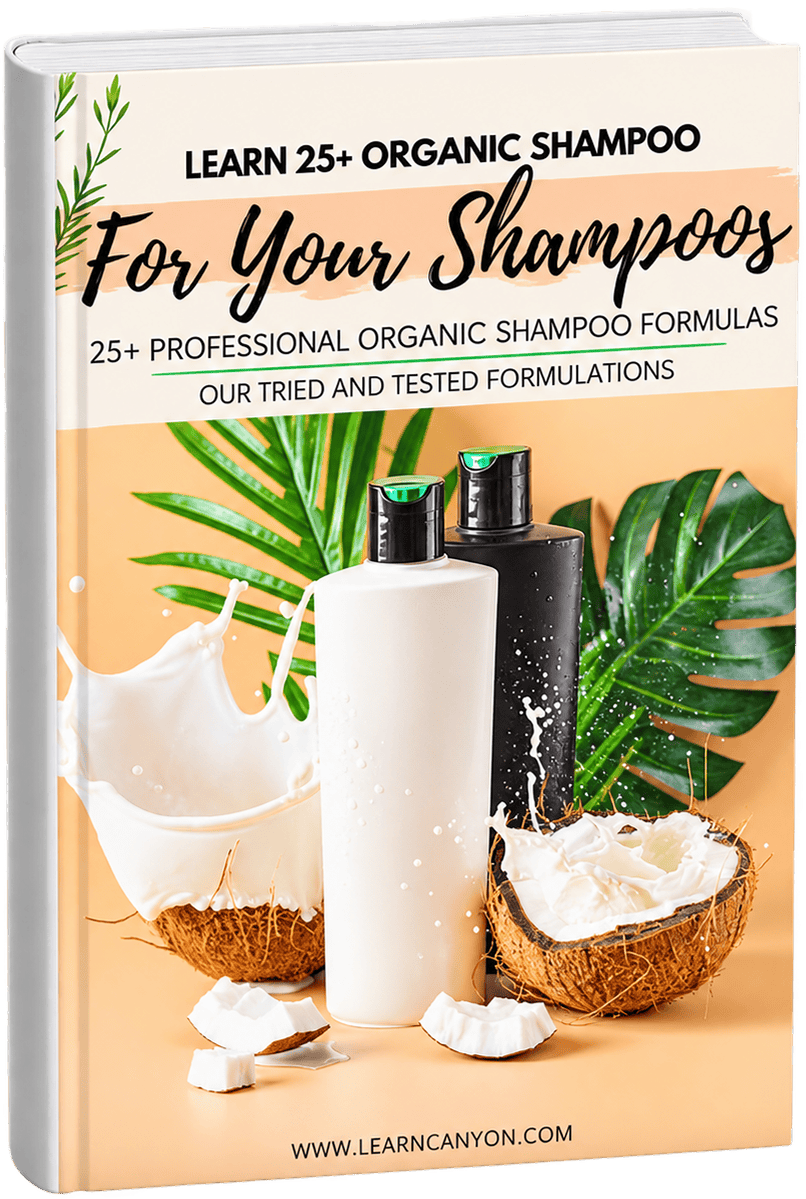
Master the Art of Organic Shampoo Formulation eBook cover

400+ pages · 25 worked formulations

Surfactant systemsViscosityFoampH + preservationHair & scalp25 formulations

It looks simple until you try it.

On paper a shampoo is six steps. In a beaker it is six decisions, each one changing the other five.

01
Surfactant
02
Water
03
Botanicals
04
Fragrance
05
Thickener
06
The bottle

→Why is it watery?

→Why did it turn cloudy?

→Why is the foam different?

→Why does the hair feel stripped?

→Why did the viscosity change?

→What pH should it be?

This is the page in the notebook where most people stop. It is also where formulation actually starts.

Two people can hold the same recipe and be doing completely different work.

Recipe follower

“What comes next?”

Coco glucoside8%
Waterto 100%
Rosemary extract2%
Fragrance0.5%
Salt1%
Preservative1%

Copy ingredients. Follow percentages. Hope it works.

Formulator

“What does this formula need?”

CleansingFoamMildnessViscosityConditioningpHPreservationBotanicalsPackagingTesting

Reads the formula as a set of connected decisions, then changes the one that actually controls the outcome.

Understand the system behind every formula.

Regular $197 · Save $150 · Instant digital access

Get the eBook for $47

A shampoo is not an ingredient list. It is a system.

Eleven decisions, each one pulling on the others. Read any row to see what it drags along with it.

Surfactants

Affects Cleansing, foam, viscosity, sensory feel

Change the surfactant blend and you have changed cleansing strength, foam character, mildness, how the thickener responds and how the formula feels on wet hair.

Cleansing

Affects Surfactants, pH, conditioning

Cleansing is a level to be chosen, not maximised. Too much strips; too little leaves residue and flat-looking hair.

Foam

Affects Surfactants, sensory feel, viscosity

Foam is largely a surfactant and dilution story. It signals performance long before the hair is dry.

Conditioning

Affects Cleansing, sensory feel, pH

Conditioning agents fight the cleansing system for the same surface. Balance decides whether hair feels clean or coated.

Botanicals

Affects Preservation, pH, viscosity

Extracts arrive with water, solids, colour and food for microbes. They belong in a formula for a reason, not for the label.

Viscosity

Affects Surfactants, botanicals, packaging

Thickness is a consequence of the whole system: salt, surfactant ratio, extracts and process, before it is a thickener dose.

pH

Affects Preservation, cleansing, conditioning

pH quietly controls mildness, viscosity, preservative efficacy and how the hair surface behaves. It is not a finishing touch.

Preservation

Affects pH, botanicals, testing

The preservative has to suit the pH, the water content, the packaging and the ingredients it sits beside.

Sensory feel

Affects Foam, conditioning, viscosity

Slip, rinse, cushion and after-feel are formulated deliberately. This is where a product feels expensive or cheap.

Packaging

Affects Viscosity, preservation, testing

A pump, a flip-top and a jar each demand a different flow, fill and closure, so packaging is a formulation input.

Testing

Affects Preservation, pH, packaging

Stability, compatibility and microbiological testing are how you find out whether the formula is real.

Not every shampoo should look, pour or feel the same.

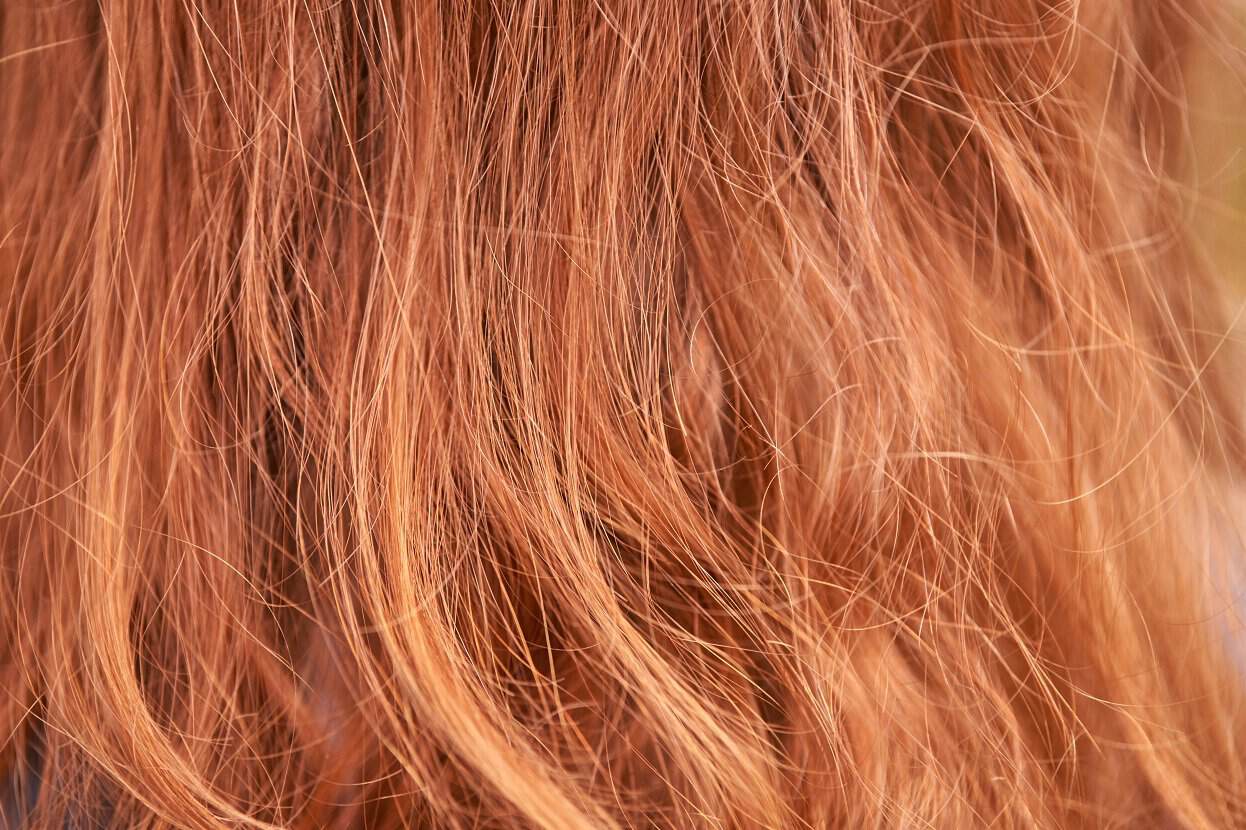
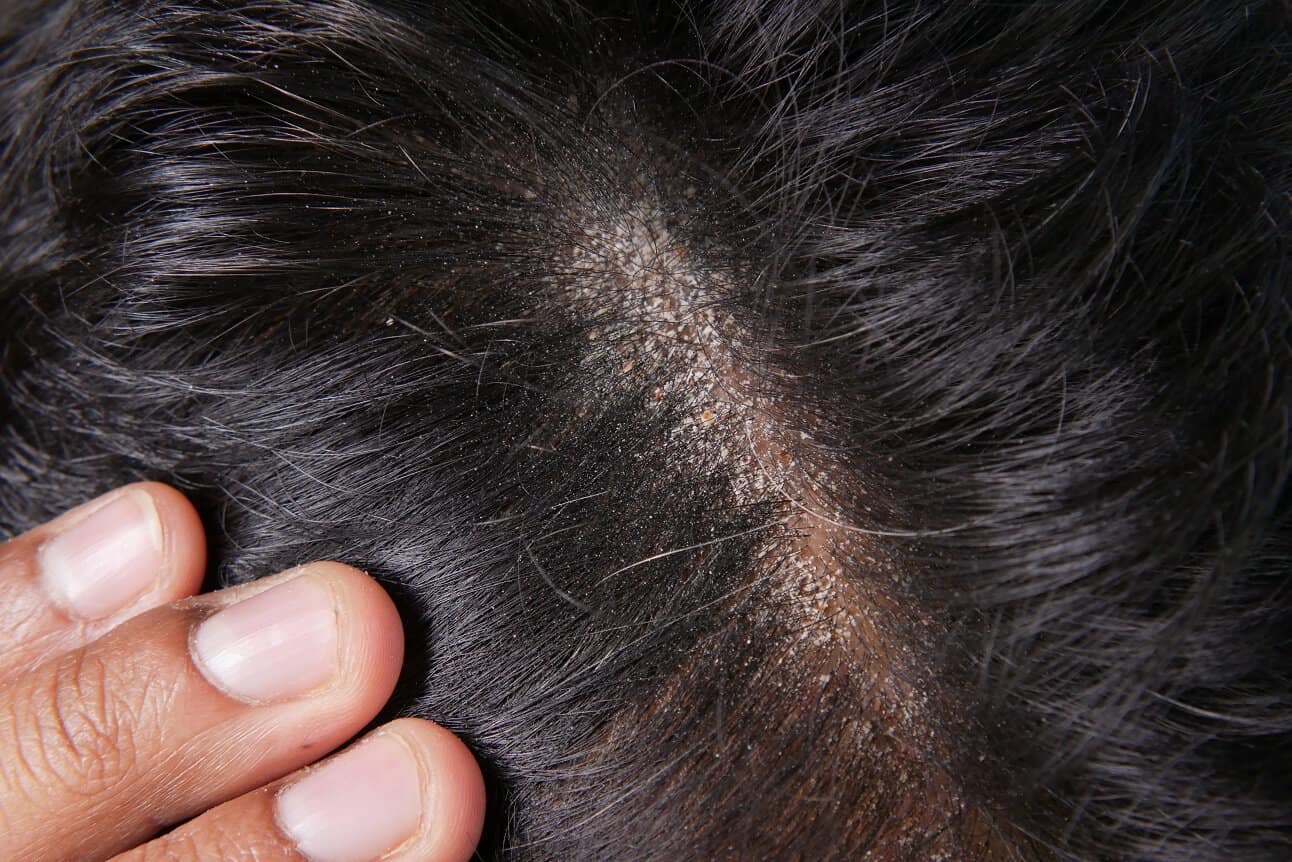
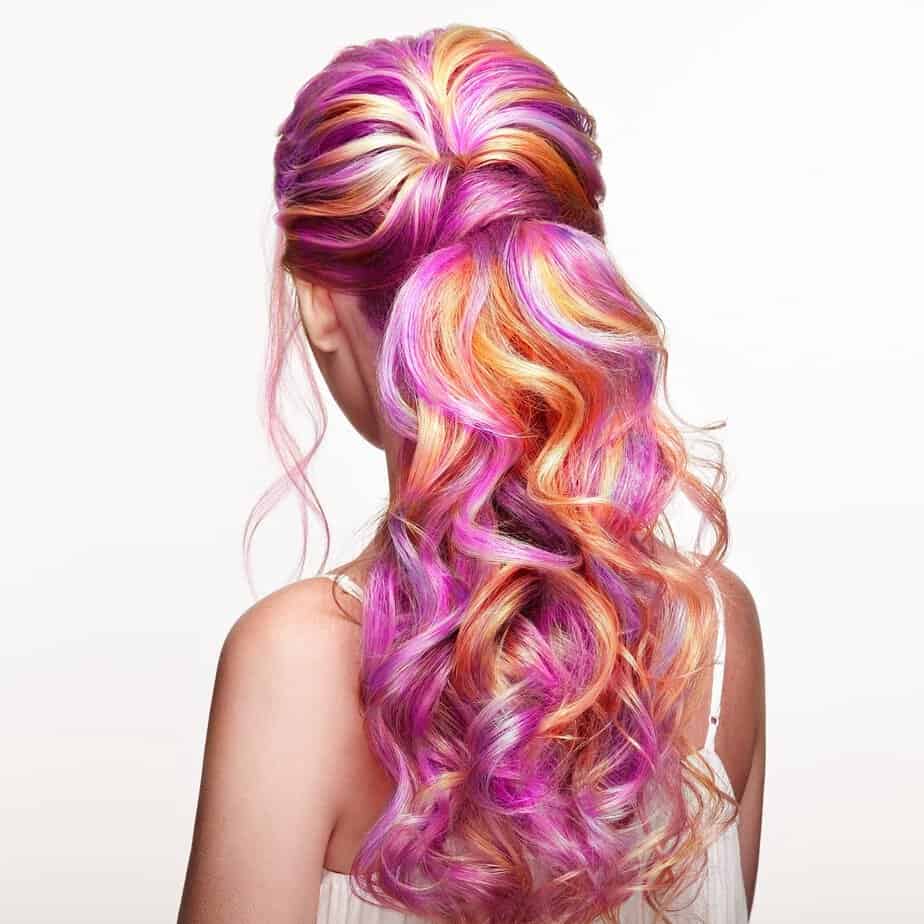
Eight finished textures, eight different formulation routes. Each tile below can hold your own macro photograph.

Stop guessing at viscosity, foam and pH.

One-time payment · Download straight away

Start learning for $47

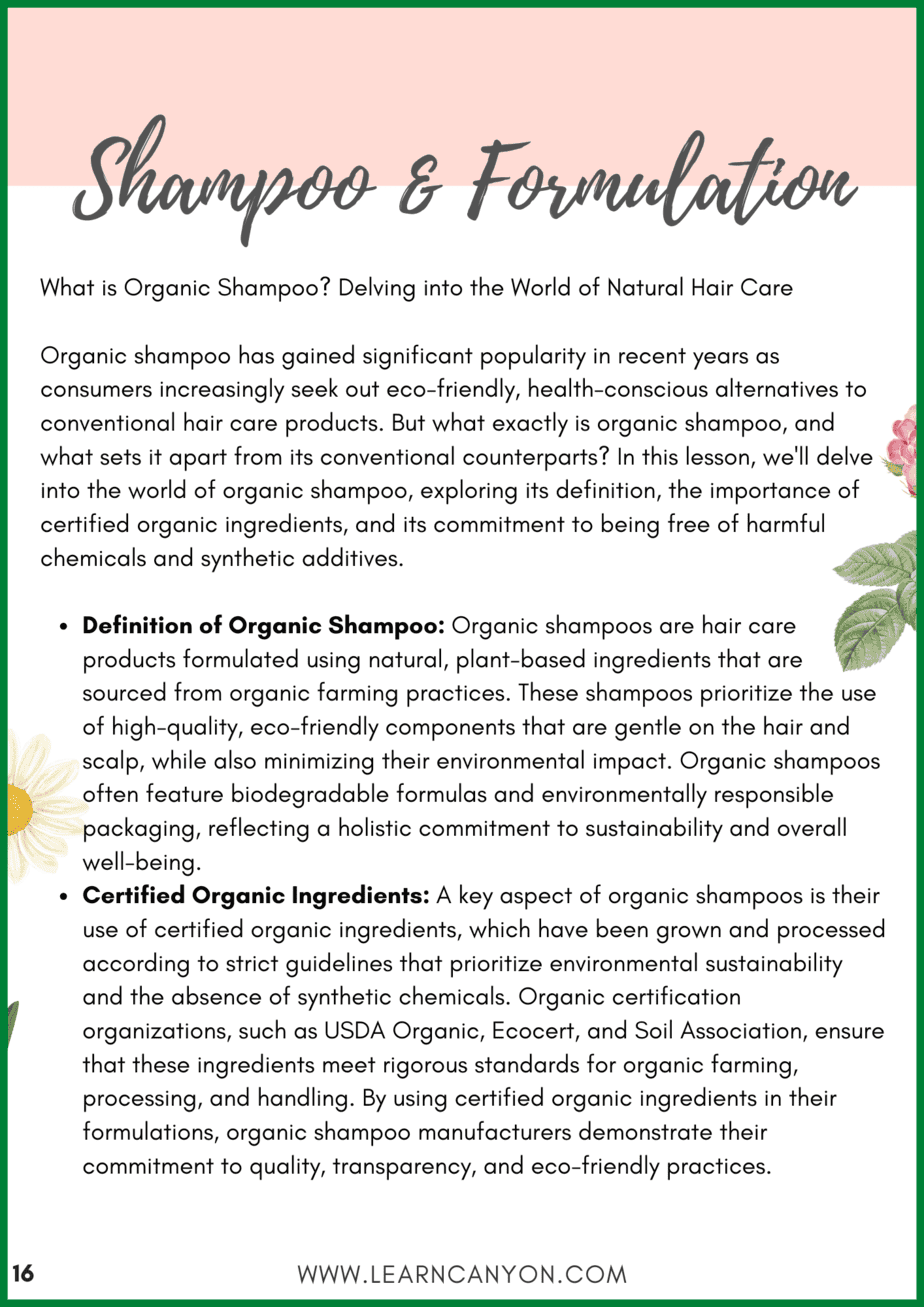
Meet the heart of your shampoo.

Surfactants do the cleansing, and they decide almost everything you feel afterwards: how much foam, how dense it is, how mild the wash is, how the hair behaves while wet. You rarely use one. You build a blend.

Anionic

The workhorses. They carry the cleansing and most of the foam, and they set the ceiling on how mild the shampoo can be.

CleansingFoam volumeThickens with salt
Amphoteric

The diplomats. Added alongside anionics they soften the wash, improve foam quality and often help the formula thicken.

MildnessFoam qualityViscosity aid
Nonionic

The quiet ones. Low charge, low irritation, used to adjust feel, solubilise fragrance and fine-tune the cleansing profile.

Low irritationSolubilisingFeel
Conditioning + support

Cationic conditioners, polymers and emollients that decide how hair feels wet, how it rinses and how it dries.

SlipDetanglingAfter-feel

Two surfactants, one behaviour.

On their own the anionic cleans hard with big loose foam and the amphoteric cleans gently with very little. Blended, the amphoteric softens the wash, the foam becomes denser and creamier, and the pair usually thickens more readily than either one alone.

Anionic Amphoteric Blended system

Viscosity is not always solved by “add more thickener.”

BATCH 014
WateryFlowingGelThickToo thick

Six inputs decide where that needle sits.

01 Surfactant systemThe ratio between your surfactants decides whether the formula can thicken at all.
02 ElectrolytesSalt builds viscosity up to a peak, then tears it back down again. Overshooting is common.
03 Botanical extractsExtracts bring water, acids and solids that can quietly thin the whole batch.
04 Other ingredientsSolubilisers, conditioners and fragrance all interfere with the structure you are building.
05 ProcessingOrder of addition, temperature and mixing speed change the final body of the same recipe.
06 Thickening strategySalt, gum or polymer are different routes with different feel, clarity and stability.

25 worked formulations, every decision explained.

248 pages · 25 worked formulations · $47

Get instant access for $47

More foam does not automatically mean better shampoo.

Lather is a signal, not a measurement. A gentle shampoo can clean beautifully with a modest, creamy foam, and a huge lather can leave hair squeaky and rough.

Cleansing Foam is not the cleaning. The surfactant is.
Lather Bubble size and density read as quality.
Sensory Cushion, slip and rinse are formulated.
Rinsing Heavy foam can mean a longer rinse.
Expectation Users judge with their hands, not a lab.

Who are you formulating for?

Professional formulation starts with who the product is for, not which ingredient is trending. Nine briefs, nine different formulas.

Dry hair persona
01
Dry hair
keep the lipids

Gentle cleansing with conditioning support so the wash does not undo the moisture you added.

Mild blendCreamy
Oily scalp persona
02
Oily scalp
clean, not stripped

Efficient cleansing at the scalp without pushing the ends into dryness.

Clear gelLight feel
Damaged hair persona
03
Damaged hair
rebuild the surface

Low-stress cleansing plus proteins and conditioning polymers that stay after the rinse.

ProteinsSlip
Colour-treated hair persona
04
Colour-treated
protect the investment

Mild surfactants, a careful pH and no unnecessary chelation of the colour you paid for.

Low pHGentle
Sensitive scalp persona
05
Sensitive scalp
reduce the load

A short, well-chosen ingredient list and the mildest system that still cleans properly.

Fragrance-freeAmphoteric
Frequent washing persona
06
Frequent washing
built for daily use

Gentle enough for every day, with foam and feel that still satisfy each time.

DailyLight
Clarifying needs persona
07
Clarifying needs
a periodic reset

A deliberate deep-cleanse product, positioned as occasional rather than everyday.

ChelationClear
Volumising persona
08
Volumising
weightless finish

Clean rinse and minimal residue so fine hair keeps its body after drying.

No build-upFluid
Strengthening persona
09
Strengthening
support over time

Proteins and scalp-focused actives chosen for a routine, not for a single wash.

ActivesRich

Scroll sideways to read all nine briefs.

Formulate for a person, not for a trend.

Save $150 today · No subscription

Get the eBook for $47

Not every “good” ingredient belongs in every formula.

Good formulation is not about adding everything. It is about knowing what belongs.

WORKING FORMULA
AloeRosemaryChamomileMintMoringaGreen teaLavenderPlant proteinsBotanical extractsHydrosols

Four of these earn their place in this formula. The rest are someone else’s shampoo.

25 formulations, built to be studied.

Every formulation in the book comes with the reasoning behind it: why that surfactant system, why that thickening route, why that pH, why those botanicals at those levels.

01 · Strength Lavender & Ylang-Ylang Strengthening Shampoo Sulfate-free anionic + amphoteric
Salt-thickened · pH 4.8 – 5.2
02 · Volume Grapefruit & Biotin Volumizing Shampoo Mild anionic blend
Gum-thickened · pH 5.0 – 5.5
03 · Hydration Coconut & Aloe Ultra Hydrating Shampoo Amphoteric-led gentle base
Polymer network · pH 5.2 – 5.8
04 · Balance Herbal Mint & Thyme Balancing Shampoo Nonionic-supported blend
Salt + amphoteric · pH 4.5 – 5.0
05 · Clarity Tea Tree & Lemon Clarifying Shampoo Anionic + conditioning polymer
Fluid by design · pH 5.5 – 6.0
06 · Strength Rosemary & Lavender Color-Protecting Shampoo Sulfate-free anionic + amphoteric
Salt-thickened · pH 4.8 – 5.2
07 · Volume Aloe & Chamomile Sensitive Scalp Shampoo Mild anionic blend
Gum-thickened · pH 5.0 – 5.5
08 · Hydration Argan & Macadamia Shine-Enhancing Shampoo Amphoteric-led gentle base
Polymer network · pH 5.2 – 5.8
09 · Balance Chamomile & Sage Anti-Dandruff Shampoo Nonionic-supported blend
Salt + amphoteric · pH 4.5 – 5.0
10 · Clarity Bamboo & Wheat Protein Thickening Shampoo Anionic + conditioning polymer
Fluid by design · pH 5.5 – 6.0
11 · Strength Peppermint & Cedarwood Oil-Control Shampoo Sulfate-free anionic + amphoteric
Salt-thickened · pH 4.8 – 5.2
12 · Volume Quinoa & Moringa Deep Repair Shampoo Mild anionic blend
Gum-thickened · pH 5.0 – 5.5
13 · Hydration Honey & Royal Jelly Hydrating Shampoo Amphoteric-led gentle base
Polymer network · pH 5.2 – 5.8
14 · Balance Green Tea & Cucumber Daily Gentle Shampoo Nonionic-supported blend
Salt + amphoteric · pH 4.5 – 5.0
15 · Clarity Hibiscus & Amla Curl Care Shampoo Anionic + conditioning polymer
Fluid by design · pH 5.5 – 6.0
16 · Strength Oat & Calendula Baby-Mild Shampoo Sulfate-free anionic + amphoteric
Salt-thickened · pH 4.8 – 5.2
17 · Volume Ginger & Nettle Scalp Stimulating Shampoo Mild anionic blend
Gum-thickened · pH 5.0 – 5.5
18 · Hydration Rice Water & Silk Gloss Shampoo Amphoteric-led gentle base
Polymer network · pH 5.2 – 5.8
19 · Balance Marula & Baobab Frizz Control Shampoo Nonionic-supported blend
Salt + amphoteric · pH 4.5 – 5.0
20 · Clarity Lemongrass & Basil Fresh Clean Shampoo Anionic + conditioning polymer
Fluid by design · pH 5.5 – 6.0
21 · Strength Blue Tansy & Aloe Soothing Shampoo Sulfate-free anionic + amphoteric
Salt-thickened · pH 4.8 – 5.2
22 · Volume Neem & Tulsi Purifying Shampoo Mild anionic blend
Gum-thickened · pH 5.0 – 5.5
23 · Hydration Shea & Hibiscus Rich Cream Shampoo Amphoteric-led gentle base
Polymer network · pH 5.2 – 5.8
24 · Balance Bergamot & Vetiver Everyday Shampoo Nonionic-supported blend
Salt + amphoteric · pH 4.5 – 5.0
25 · Clarity Pomegranate & Keratin Repair Shampoo Anionic + conditioning polymer
Fluid by design · pH 5.5 – 6.0

Study the system, not the recipe.
Build formulas instead of collecting recipes.

Instant access · Free packaging guide included

Start learning for $47

The sentences in your head change first.

Before

“I'll add rosemary because rosemary is good for hair.”

After

“What purpose is this ingredient serving?”

Before

“My shampoo is watery. I’ll add a thickener.”

After

“What part of the system is affecting viscosity?”

Before

“I'll swap this surfactant.”

After

“Is this substitute technically appropriate?”

Before

“I have a formula. I can sell it.”

After

“What development, testing and regulatory work comes next?”

Your preservative does not exist separately from your pH.

Digital pH meter

5.5

pH reading

Acidic 3Neutral 7Alkaline 9
Typical shampoo range

Most shampoos sit around 5.0 to 5.5. Cleansing, feel, viscosity and common preservative systems all cooperate in this window. Below 4.5 you narrow your options; above 7 you lift the cuticle and lose preservative performance.

Preservation is a system decision too. The pH you choose changes which preservatives still work, botanical extracts bring water and nutrients with them, the packaging decides how often the product meets fingers and air, and testing is what tells you the truth.

pH Sets which preservatives still perform.
Preservative Chosen for the system, not the label.
Water activity Water is what microbes actually want.
Packaging Decides exposure to air and fingers.
Hygiene Clean process, clean batch.
Testing The only proof any of it worked.

From first beaker to your own collection.

Regular $197 · Yours for $47

Get instant access for $47

Your formula eventually has to leave the beaker.

01 FormulateSet the brief, choose the system, build the first beaker and record what you actually did.
02 TestStability, pH over time, viscosity, compatibility with packaging and preservative efficacy.
03 PackageChoose a bottle and closure that suit the viscosity, the claim and the way it will be used.
04 PositionDecide who it is for, what it promises and how it sits beside everything else on the shelf.
05 Build your collectionOne considered shampoo becomes a range when the thinking behind it is consistent.

Maybe your goal is not just one shampoo.

Maybe you are building the beginning of your own haircare collection: eight products that look like they came from the same mind, because they did.

Gentle daily
Clarifying
Hydrating
Sensitive scalp
Volumising
Strengthening
Colour care
Botanical

Open it and this is what you get.

Inside the Shampoo Formulation eBook
Shampoo fundamentalsSurfactantsHair + scalpIngredient selectionBotanicalsFormula developmentPreservationpHPackagingSustainabilityTestingRegulatory awarenessBrand development25 shampoo formulations

Judgement is the part AI cannot hand you.

One resource · Keep it for good

Get the eBook for $47

But the formula does not end in the beaker.

Bonus included free

Free sustainable packaging guide

A finished formula still has to be filled, closed, labelled and shipped. This guide walks through the material choices, what each one demands of the product inside, and how to make a sustainable claim you can actually stand behind.

Kraft Paper-based outer and refill cartons.
Amber glass Protective, premium, heavy to ship.
Recyclable PET Mono-material bottles and caps.
Aluminium Endlessly recyclable, needs a liner.
Refill concepts Concentrates, pouches and bulk.
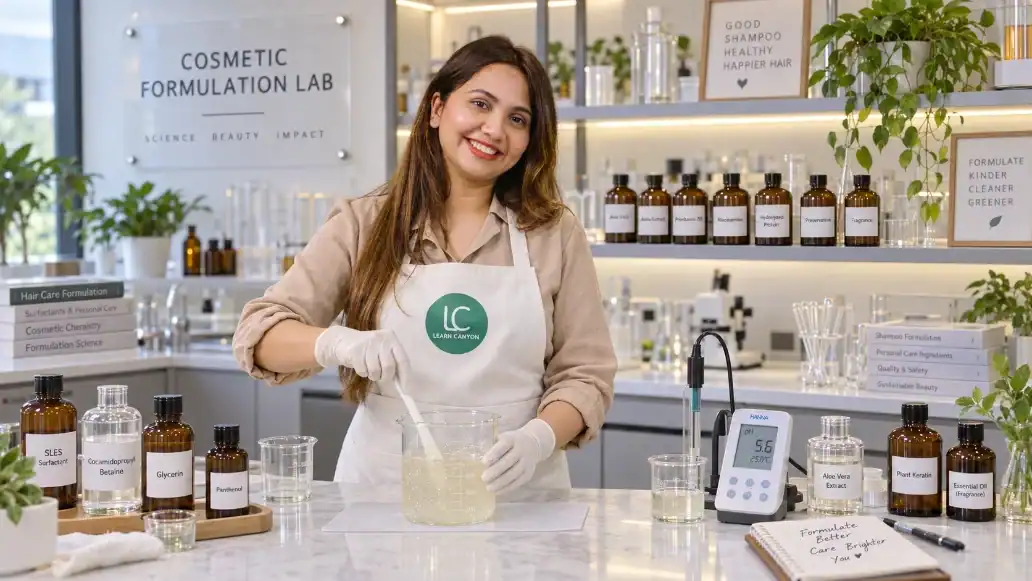
Priya, founder of Learn Canyon

Formulating since 2015 · Learn Canyon founded 2018

Created by a formulator who believes you should understand what you create.

Priya has spent a decade formulating cosmetics and teaching the reasoning behind them. Learn Canyon exists because too much of the available material hands people a recipe and leaves out the part that matters: why it was built that way, and what to do when it stops working.

This book is the shampoo category taught the way she teaches it: systems first, recipes as worked examples.

AI can generate a formula. But can you tell whether it makes sense?

Aquato 100%
Sodium C14-16 olefin sulfonate14.0%
Cocamidopropyl betaine6.0%
Rosemary extract3.0%
Aloe juice5.0%
Xanthan gum1.2%
Fragrance1.0%
Preservative0.5%
Citric acidq.s.
Compatible?Correct percentage?Appropriate preservative?Suitable pH?Correct process?Proper testing?Appropriate surfactant system?

The easier formulas become to generate, the more valuable formulation judgement becomes.

Everything in one resource.

Master the Art of Organic Shampoo Formulation
25 formulation examples
Surfactant education
Hair + scalp education
Ingredient knowledge
Preservation
pH
Testing
Packaging
Sustainability
Regulatory awareness
Brand development
Sustainable Packaging Guide (free)

Regular value

$197

$47

You save $150 today

One-time payment Instant access
Get the eBook for $47

$47 disappears very quickly in formulation. Knowledge does not.

Trial and error

Surfactant you never used$28
Wrong thickener$19
Extra fragrance$24
Random botanical$21
Another preservative$26
Failed batches$35
Shipping fees$29
Packaging samples$32
Still guessing$214
$47

One resource

A structured way to learn the category, so the next ingredient you buy is one you chose on purpose.

Two paths from here.

Save another recipe.

Search again.Watch another video.Buy another ingredient.Generate another AI formula.Start again every time something fails.

Learn the system.

Understand surfactants.Understand hair.Understand preservation.Study 25 formulations.Learn to troubleshoot.Build formulation judgement.
Take the second path for $47

Questions, answered.

Do I need a chemistry degree?

No. The book teaches formulation reasoning in plain language and builds the chemistry you need around real shampoo decisions rather than starting from a textbook.

Can complete beginners use this?

Yes. It starts at shampoo fundamentals and moves up. If you have never made a shampoo you will be able to follow it; if you have made twenty, you will finally know why they behaved differently.

Can I sell the 25 formulations immediately?

They are teaching formulations, not market-ready products. Any product you sell needs its own stability, compatibility, preservative efficacy and safety work under your local regulations. The book explains what that involves.

Can I replace one surfactant with another?

Sometimes, and the book covers how to judge it: charge type, active content, contribution to foam and viscosity, mildness and how the swap affects the rest of the system.

Does this cover different hair types?

Yes. Hair and scalp characteristics, and how they change the brief for dry, oily, damaged, colour-treated and sensitive cases, are a full part of the material.

What if my shampoo fails?

Troubleshooting is built in. Thin batches, cloudiness, separation, weak foam, stripped feel and viscosity drift are each traced back to the part of the system causing them.

Does it include preservation?

Yes: preservative selection, how pH and ingredients affect efficacy, and why testing is the only proof that it works.

Does it cover pH?

Yes, as a working formulation control: what it affects, how to adjust it and how it interacts with mildness, viscosity and preservation.

Does it include packaging?

Yes, plus the free Sustainable Packaging Guide, which covers material choices and what they demand of the formula inside.

Is this a physical book?

No. It is a digital book you download and keep, readable on phone, tablet, laptop or printed at home.

How do I access it?

Instantly. You receive the download immediately after checkout, along with the bonus guide.

Is the Sustainable Packaging Guide included?

Yes, free with the book. No extra step and no extra cost.

Stop searching for the perfect shampoo recipe.

Start learning how shampoos are actually built.

25 shampoo formulationsFormulation educationSurfactant knowledgeHair + scalpBotanical formulationPreservationpHPackagingTestingSustainabilityBusiness thinkingFree packaging guide
$197 $47 today
Yes, I want to master organic shampoo formulation

One-time payment · Instant digital access · Save $150

Become the person behind the product.

Get instant access for $47 Regular $197 · Save $150 Yes, I want this