Cosmetic formulation is one of those terms that sounds technical… but when you truly understand it, everything suddenly feels simpler.
At its core, cosmetic formulation is the intentional design of a cosmetic product.
Not mixing.
Not guessing.
Not copying a recipe blindly.
Formulation is the process of deciding what goes into a product, why it goes there, how much is used, and how all the ingredients behave together over time.
When you formulate, you’re not just asking:
“What ingredients should I add?”
You’re asking deeper questions like:
- What role does this ingredient play in the product?
- What problem is this product meant to solve?
- How should this product feel, look, and perform?
- Will this formula stay stable after 30, 60, or 90 days?
- Is it safe for repeated use?
These are formulation questions.
Formulation Is Product Thinking, Not Ingredient Thinking
This is a mindset shift that changes everything.
Beginners often think in terms of ingredients:
“I want to use rose water.”
“I want to add vitamin C.”
“I want it to be natural.”
A formulator thinks in terms of product design:
“I’m creating a hydrating gel for sensitive skin.”
“I need a lightweight emulsion that absorbs fast.”
“I want barrier repair without greasiness.”
Once the product goal is clear, ingredients are chosen to serve that goal, not just because they sound good.
I still remember when I stopped formulating around ingredients and started formulating around outcomes. That one change alone improved my products more than adding any new active ever did.
Cosmetic formulation is often explained in a very technical way, which is why it feels intimidating to beginners. But at its core, formulation is not about complex chemistry or lab coats. It is about intentional creation. When you formulate a cosmetic product, you are not just putting ingredients together because they sound good, you are designing a product with purpose.

Cosmetic formulation means understanding why an ingredient exists in a product, what role it plays, how much of it is needed, and how it behaves when combined with other ingredients. Every ingredient in a well-made formula has a reason to be there. If you remove it, change its percentage, or replace it, the product changes sometimes in very visible ways, and sometimes in ways you only notice over time.
This is where formulation becomes different from casual DIY. When you formulate, you are thinking ahead. You are thinking about how the product will feel after two weeks, how it will behave in different temperatures, how it will sit on the skin, and whether it will remain safe and stable during its entire shelf life. That forward-thinking mindset is what separates formulation from simple mixing.
When I first started, I genuinely believed that if a product looked good and felt good immediately after making it, then it was successful. But with time and experience, I learned that the real test of a formulation begins after it’s made. Does it stay the same after a week? A month? Does the texture shift? Does the scent change? Does it still perform the way it did on day one? These questions are all part of formulation thinking.
Cosmetic formulation is also about control. Control over texture, absorption, stability, performance, and safety. Instead of hoping a product turns out well, you know why it will. That confidence doesn’t come from memorising recipes it comes from understanding structure.
Another important part of formulation is working in percentages rather than measurements.
This is something that feels uncomfortable at first but becomes incredibly empowering once you understand it. Percentages allow you to scale a product up or down without changing how it behaves. Whether you make 50 grams or 5 kilograms, the formula remains consistent because the logic behind it remains intact. This is one of the biggest shifts beginners experience when they move from hobby mixing to real formulation.
Formulation also teaches you restraint. Beginners often feel that adding more ingredients will make a product better. In reality, strong formulations are often simple. They rely on well-chosen ingredients used at correct levels rather than long, impressive-looking lists. Over time, you begin to appreciate balance more than excess.
At its heart, cosmetic formulation is a skill one that develops with practice, observation, and curiosity. It is not about being perfect from the start. It’s about learning how ingredients behave, understanding cause and effect, and slowly building the ability to design products intentionally rather than by trial and error.
Once you truly understand what cosmetic formulation is, everything changes. You stop feeling dependent on recipes. You start reading ingredient lists differently. You begin to look at products not as mysteries, but as systems that can be understood, recreated, and improved.
And that’s when formulation becomes not just a technique but a way of thinking
Mixing vs Formulating (The Difference That Changes Everything)
This is one of the most important distinctions you’ll ever understand in cosmetic formulation, and also the one most beginners don’t realize they’re missing.
At first, everything feels exciting. You’re mixing oils, gels, powders, maybe even emulsions. Some products turn out beautifully. Others… not so much. A cream that looked perfect last week suddenly separates. A serum feels different every time you make it. And slowly, a quiet frustration sets in.
You’re doing something right but you don’t know why it works sometimes and fails other times.
That’s usually the moment when mixing needs to evolve into formulation.
Mixing is where almost everyone starts. It’s intuitive, creative, and curiosity-driven. You add a little more oil because the product feels dry. You dilute because it feels thick. You include ingredients because they’re trending, natural, or simply exciting to work with. And there’s nothing wrong with this stage. I started exactly here too.
But mixing relies heavily on feel, instinct, and trial-and-error. And while that works in the beginning, it doesn’t give you consistency. It doesn’t give you predictability. And it definitely doesn’t give you control.
Formulating is different.
Formulating begins when you stop asking, “What else can I add?” and start asking, “Why is this ingredient here in the first place?”
In formulation, every ingredient earns its place. Each one has a specific function, a defined percentage range, and a reason for existing in the product. You’re no longer adjusting blindly. You’re designing intentionally.
One of the biggest shifts between mixing and formulating is moving away from intuition alone and stepping into percentages. Mixing works with spoons, cups, and “just a little more.” Formulating works with numbers not complicated ones, but precise ones. Percentages allow a formula to behave the same whether you make 100 grams or 10 kilos. They remove guesswork and replace it with clarity.
This is usually the moment when things finally start making sense.
Instead of hoping the product works, you begin to predict how it will behave. You know what will happen if you increase the oil phase. You understand why a thickener isn’t compatible with a certain system. You can look at a formula and tell where it might fail before it actually does.
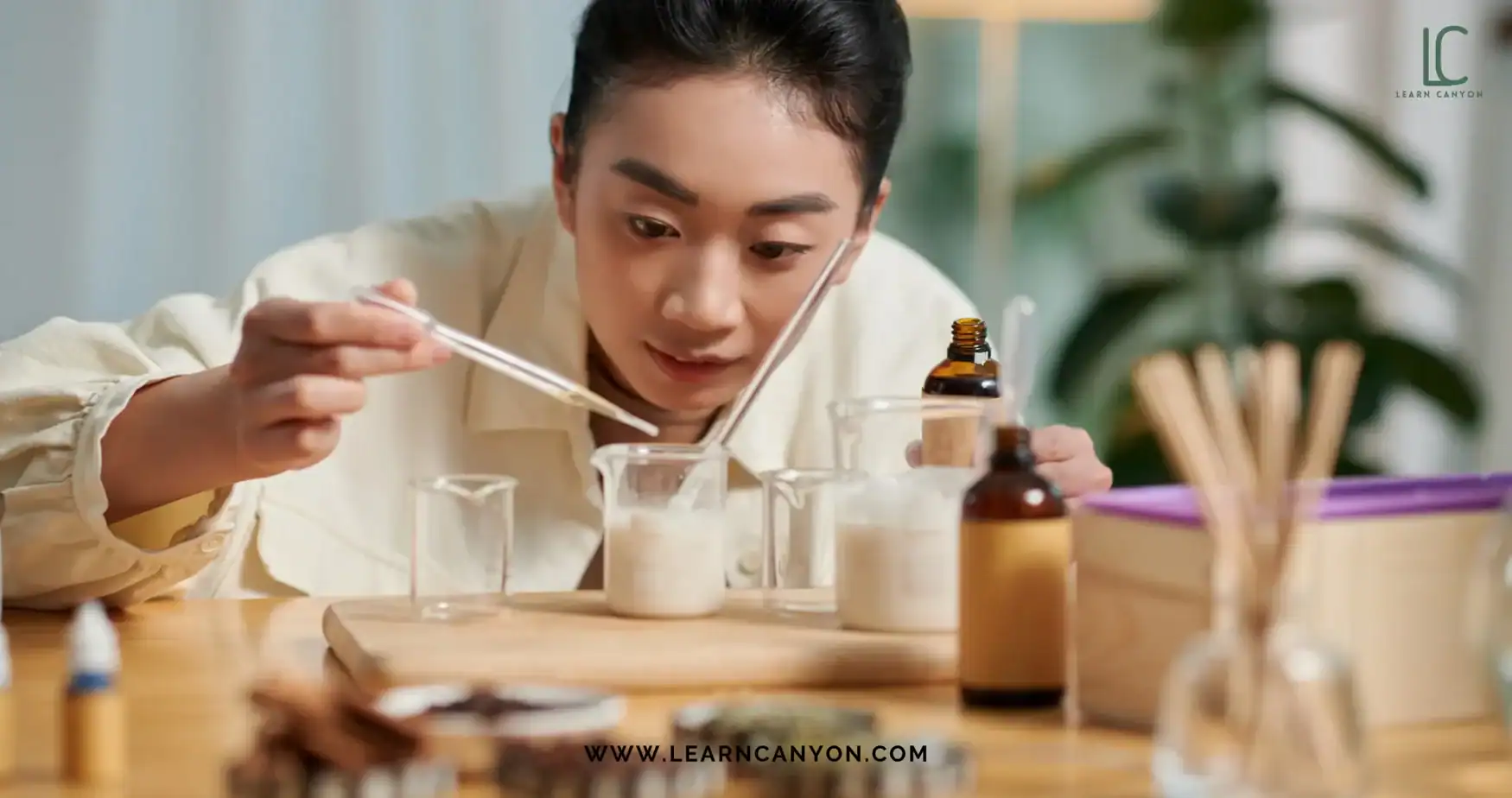
Mixing reacts.
Formulating anticipates.
Another key difference is where your focus goes. When you’re mixing, you focus on individual ingredients. When you’re formulating, you focus on the system. Is this an emulsion? A gel? A surfactant system? An anhydrous blend? Once you understand systems, formulation stops feeling overwhelming and starts feeling structured.
You also begin to realize something surprising: more ingredients don’t mean better products. In fact, some of the most elegant formulations are simple not because the formulator lacked creativity, but because they understood restraint. Knowing what to leave out is just as important as knowing what to include.
Mixing is emotional. It’s exciting, trend-driven, and instinctive. Formulating still allows creativity, but it is guided by logic. A formulator can love an ingredient and still choose not to use it because it doesn’t serve the product goal. That kind of decision comes with understanding, not limitation.
And this is where real confidence is built.
When you mix, success feels accidental.
When you formulate, success is repeatable.
Formulation gives you control over texture, performance, stability, and safety. It allows you to troubleshoot instead of starting over. It gives you the ability to modify, scale, and even teach others.
So no, mixing isn’t wrong. Mixing is where curiosity begins. But formulation is where clarity lives.
And the moment you start thinking in terms of structure, function, percentages, and outcomes you’re no longer just mixing ingredients in a bowl.
You’re formulating with intention.
Now.. Who Is a Cosmetic Formulator Exactly ?
This is a question I love answering, because most people imagine the wrong thing.
When you hear about cosmetic formulators, you might picture someone in a lab coat, surrounded by high-end equipment, handling rare ingredients with complicated names. And while that image isn’t completely wrong, it’s also not the truth.
A cosmetic formulator is not defined by a lab, a degree, or expensive tools.
A cosmetic formulator is defined by how they think.
A formulator is someone who understands products beyond the surface. They don’t just see a cream they see a system. They don’t just see an ingredient list they see structure, balance, and intention.
When I meet beginners, many of them say, “I’m just experimenting” or “I’m not a formulator yet.” But the moment you start asking why an ingredient is used, how much is appropriate, and what will happen if something changes you’re already stepping into a formulator’s mindset.
The difference between a hobbyist and a cosmetic formulator is not passion. Both have passion. The difference is depth of understanding.
A hobbyist follows recipes and hopes for consistency. A formulator understands the recipe well enough to modify it, improve it, or rebuild it entirely. They know that a product behaving differently isn’t a failure, it’s information.
A cosmetic formulator develops skills over time. They learn how ingredients behave in different systems, how formulas change with temperature, time, and storage, and how small percentage changes can completely transform a product. They stop blaming ingredients when something goes wrong and start examining structure instead.
One of the most important qualities of a formulator is restraint. A formulator doesn’t add ingredients just because they’re trending or expensive. They add what the product needs and nothing more. This ability to simplify comes only with understanding.
A formulator also thinks beyond Day One. They don’t ask only, “How does this feel right now?” They ask, “How will this feel in two months?” “Will this remain stable?” “Is this safe for repeated use?” This long-term thinking is what separates professional formulation from casual experimentation.
Another thing people don’t realize is that formulators aren’t born confident. Confidence comes from clarity. It comes from understanding structure, logic, and cause-and-effect. When something goes wrong, a formulator doesn’t panic they analyze.
And perhaps the most important truth: a cosmetic formulator is not someone who knows everything.
A formulator is someone who knows how to learn correctly.
They understand fundamentals deeply enough to adapt, grow, and evolve. They don’t chase every trend. They build strong foundations first.
So if you’ve ever felt like you don’t “qualify” to call yourself a formulator yet, let me say this gently:
You don’t become a formulator the day you master everything.
You become a formulator the day you stop guessing and start understanding.
And that shift from uncertainty to clarity is something anyone can learn, step by step.
Types of Cosmetic Products You Can Formulate
One of the most exciting parts of learning cosmetic formulation is realizing just how wide this field actually is.
Many beginners think formulation means only creams and lotions. But cosmetic formulation goes far beyond that. Once you understand the basics, you start seeing products everywhere on shelves, in bathrooms, in salons and you realize, this too is a formulation.
What changes from product to product is not just the ingredients, but the system, the structure, and the purpose behind it.
Let’s explore the main categories in a way that feels simple, not overwhelming.
Skincare Products
Skincare is often where people begin, and for good reason. It’s relatable, personal, and deeply connected to skin health.
As a formulator, skincare allows you to work with a wide range of textures and systems from light gels to rich creams. You can formulate cleansers, toners, serums, moisturizers, masks, exfoliants, sunscreens, and treatments for specific concerns like acne, pigmentation, sensitivity, or aging.
What’s important to understand is that skincare formulation is not about chasing actives. It’s about building a product that works with the skin, not against it. Barrier support, pH balance, ingredient compatibility, and skin feel all matter just as much as the star ingredients.
Once you grasp this, your skincare formulas stop feeling random and start feeling intentional.
Haircare Products
Haircare formulation often surprises beginners because it behaves very differently from skincare.
Hair is not alive like skin, so the goals change. In haircare, formulation focuses on cleansing efficiency, conditioning, manageability, scalp comfort, and long-term hair health.
As a formulator, you can create shampoos, conditioners, masks, serums, oils, leave-ins, and scalp treatments. You learn how surfactant systems work, how conditioning agents deposit on hair, and how to balance performance with mildness.
Haircare teaches formulators a lot about systems and compatibility. It’s where many people truly understand why structure matters more than ingredient hype.
Personal Care Products
Personal care often feels simpler, but it’s just as important.
This category includes soaps, body washes, deodorants, body lotions, hand creams, foot creams, intimate care products, and hygiene-focused formulations.
Personal care formulation emphasizes safety, gentleness, stability, and everyday usability. These are products people use daily, sometimes multiple times a day, which means tolerance and long-term skin interaction become crucial.
For many formulators, personal care is where professional thinking really deepens because the margin for error becomes smaller.
Anhydrous Products
Anhydrous products are formulations that contain no water.
This category includes oils, balms, body butters, lip products, salves, and some makeup products. Because there’s no water, preservation requirements are simpler, which makes anhydrous products a common starting point for beginners.
However, “simpler” doesn’t mean “basic.”
Anhydrous formulation teaches you about oxidation, texture control, melting points, sensory feel, and ingredient synergy. Grainy butters, sweating balms, and unstable textures often appear when formulation logic is missing.
When done right, anhydrous products can be incredibly elegant and stable.
Water-Based Products
Water-based formulations include creams, lotions, gels, toners, serums, shampoos, and cleansers.
These products require a deeper level of formulation understanding because water introduces complexity. Preservation becomes essential. pH matters. Ingredient compatibility matters. Stability over time matters.
Water-based formulation is where beginners often feel intimidated, but it’s also where formulation becomes most rewarding. Once you understand emulsions, gel networks, and surfactant systems, these products stop feeling scary and start feeling structured.
So, Where Should You Start?
There is no single right answer.
Some people start with anhydrous products and build confidence. Others jump into water-based systems with proper guidance. What matters is not the category it’s the foundation you build.
When you understand formulation principles, you can move across categories with confidence. The logic remains the same. Only the systems change.
And that’s the beauty of cosmetic formulation.
It’s not about limiting yourself to one product type. It’s about learning how products are built so you can build anything.
Common Beginner Confusions
Natural vs Safe, Organic vs Professional
If there’s one thing I’ve learned after working with thousands of beginners, it’s this: confusion doesn’t come from lack of passion, it comes from mixed messages.
Social media, blogs, labels, and trends often oversimplify formulation. Words like natural, organic, chemical-free, and toxin-free get thrown around without context. And for someone genuinely trying to learn, this creates a lot of self-doubt.
Let’s slow things down and clear a few of the most common confusions gently and honestly.
Natural Does Not Automatically Mean Safe
This is probably the biggest misunderstanding in cosmetic formulation.
Many beginners believe that if an ingredient is natural, it must be safe. But safety doesn’t come from whether something is plant-derived or lab-derived. Safety comes from how an ingredient is used, at what percentage, and in which formulation system.
Essential oils are a perfect example. They’re natural, but they’re also highly concentrated. Used correctly, they can be wonderful. Used carelessly, they can irritate or sensitize the skin.
I’ve seen beginners avoid preservatives because they sound “chemical,” yet overload formulas with botanical extracts and essential oils unknowingly making the product less safe, not more.
Formulation teaches you something important:
Nature is powerful, and powerful things require respect.
Once you understand this, fear starts to dissolve and responsibility takes its place.
Organic Does Not Automatically Mean Professional
Another common belief is that using organic ingredients automatically makes a product professional or superior.
Organic certification speaks to how an ingredient was grown, not how a product is formulated.
A product can be organic and still:
- Separate
- Spoil quickly
- Feel unpleasant
- Perform poorly
Professional formulation is about structure, stability, and logic. It’s about understanding systems, compatibility, and long-term behavior regardless of whether the ingredient is organic, natural, or nature-identical.
Some of the most stable, skin-loving formulas use a thoughtful blend of organic ingredients and carefully chosen functional ingredients. Balance is what makes a product professional, not just labels.
“Expensive Ingredients Will Make My Formula Better”
This one comes from a good place: the desire to create high-quality products. But expensive does not always mean effective.
Beginners often think that adding more activities or premium ingredients will automatically improve performance. In reality, overcrowded formulas often perform worse.
When too many ingredients compete in one system, stability and skin tolerance suffer. Some of the best formulations I’ve worked on became better after simplifying them.
Professional formulation is not about how impressive your ingredient list looks.
It’s about how well the product works as a whole.
“If It’s DIY, It’s Not Real Formulation”
This belief stops many people from starting.
DIY is not the enemy. DIY is often the entry point.
What matters is how you approach it.
A DIY product made with understanding, correct percentages, preservation, and structure can be formulated professionally. On the other hand, a product made in a lab without understanding is still just guesswork.
Professional formulation is a mindset before it’s a setup.
“I Need to Know Everything Before I Start”
This confusion creates the most overwhelm.
You don’t need to understand advanced chemistry, global regulations, or complex testing protocols on day one. Trying to learn everything at once only leads to burnout.
Formulation is layered learning. You build fundamentals first, then expand.
When beginners give themselves permission to learn step by step, confidence grows naturally.
Most beginner confusion comes from one simple gap: lack of foundational clarity.
Once you understand:
- why ingredients behave the way they do
- how systems work
- how safety is actually determined
…the noise fades away.
Formulation stops feeling intimidating and starts feeling logical.
And that’s exactly where real learning begins.
“Now What You Don’t Need to Know on Day One”
This part is important.
You do not need:
- Advanced chemistry textbooks
- Complicated regulations memorized
- Lab-grade equipment
- Hundreds of ingredients
You need:
- Clear fundamentals
- Logical thinking
- Understanding of formulation structure
- Confidence to ask why
Everything else builds on this.
When beginners try to learn everything at once, they burn out. I’ve seen it happen far too often. Slow, structured learning always wins.
Conclusion :
If there’s one thing I want you to take away from this blog, it’s this cosmetic formulation is not as out of reach as it may seem. It’s not reserved for scientists in labs or brands with massive budgets. It begins the moment you stop blindly mixing and start asking why.
Every skilled formulator you admire today once stood exactly where you are now curious, confused, and unsure if they were “doing it right.” The difference is not talent or access to ingredients. The difference is understanding the logic behind formulation and giving yourself permission to learn it step by step.
You don’t need to know everything today. You just need clarity on the basics, patience with the process, and the willingness to learn from what your formulas teach you. With the right foundation, formulation becomes less overwhelming and far more empowering.
This blog is just the beginning. As you move forward in this series, you’ll start seeing products differently not as recipes to follow, but as systems you can understand, adapt, and create with confidence.
So take your time. Stay curious. And most importantly, trust that you’re already on the right path.
The next blog will clear one of the biggest doubts beginners face DIY vs Professional Formulation and help you understand where you truly stand and how to move forward without confusion.You’re not late.
You’re just getting started.