



Creating a signature scent is one of the most exciting parts of formulating skincare and haircare products. A beautiful natural fragrances doesn’t just make a product smell good it can completely transform the consumer’s experience, evoke emotion, build brand identity, and set your formulations apart in a crowded market.
But developing a natural fragrance blend requires more than simply mixing a few essential oils together. It’s a thoughtful balance of aroma chemistry, dermal safety, scent longevity, and compatibility with your formula.
In this blog, let’s walk through a step-by-step process to craft unique, natural fragrance blends using essential oils and extracts, the same approach used by professional perfumers and high-end natural beauty brands.
Let’s Begin With an Olfactory Direction (Your Scent Story)
Before you even open a bottle of essential oil, pause for a moment and think about the feeling you want your product to create. This is what perfumers call your olfactory direction but in simpler words, it’s the story behind your scent.
A fragrance is not just a smell.
It’s an emotion.
A memory.
A tiny piece of storytelling bottled into your formula.
So ask yourself:
- What should someone feel when they apply this product?
- Should it energize them like a sunny morning?
- Should it wrap them in comfort like a soft blanket?
- Should it smell herbal and grounding, like Ayurveda in a bottle?
- Or clean and airy, like freshly laundered linen?
When you define the mood, blending becomes so much easier.
Let’s say you want a “fresh and clean” vibe immediately your mind goes to lemon, peppermint, eucalyptus, rosemary.
If you want something soft and feminine, you’ll naturally reach for lavender, rose geranium, ylang-ylang.
For earthy Ayurvedic blends, you may think of vetiver, frankincense, tulsi, patchouli.
For summer-inspired scents, citrus and light florals become your best friends.
Think of this like mood-boarding your fragrance.
You’re not choosing oils yet you’re simply imagining the personality of your product.
And here’s a little secret: When you know the personality, the fragrance almost builds itself.
This step also ensures your scent aligns with your brand identity. For example:
- A minimalist natural skincare brand may want clean, understated aromas.
- An Ayurvedic hair care line may lean into earthy, herbal, grounding notes.
- A luxury body oil may prefer warm, sensual, sophisticated blends.
- A fun, playful brand may love sweet, fruity, bright moods.
So write your direction in one simple sentence.
Something like:
- “Clean linen with a whisper of soft florals.”
- “Citrus woods with a warm, cozy undertone.”
- “Fresh herbs blended into a breezy summer scent.”
- “Earthy Ayurveda meets modern spa luxury.”
Once you have this single guiding line, every choice you make every essential oil, every note, every fixative becomes intentional.
Your fragrance will no longer be a random mix of essential oils. It will be a story you crafted on purpose, and people will be able to sense that the moment they inhale it.
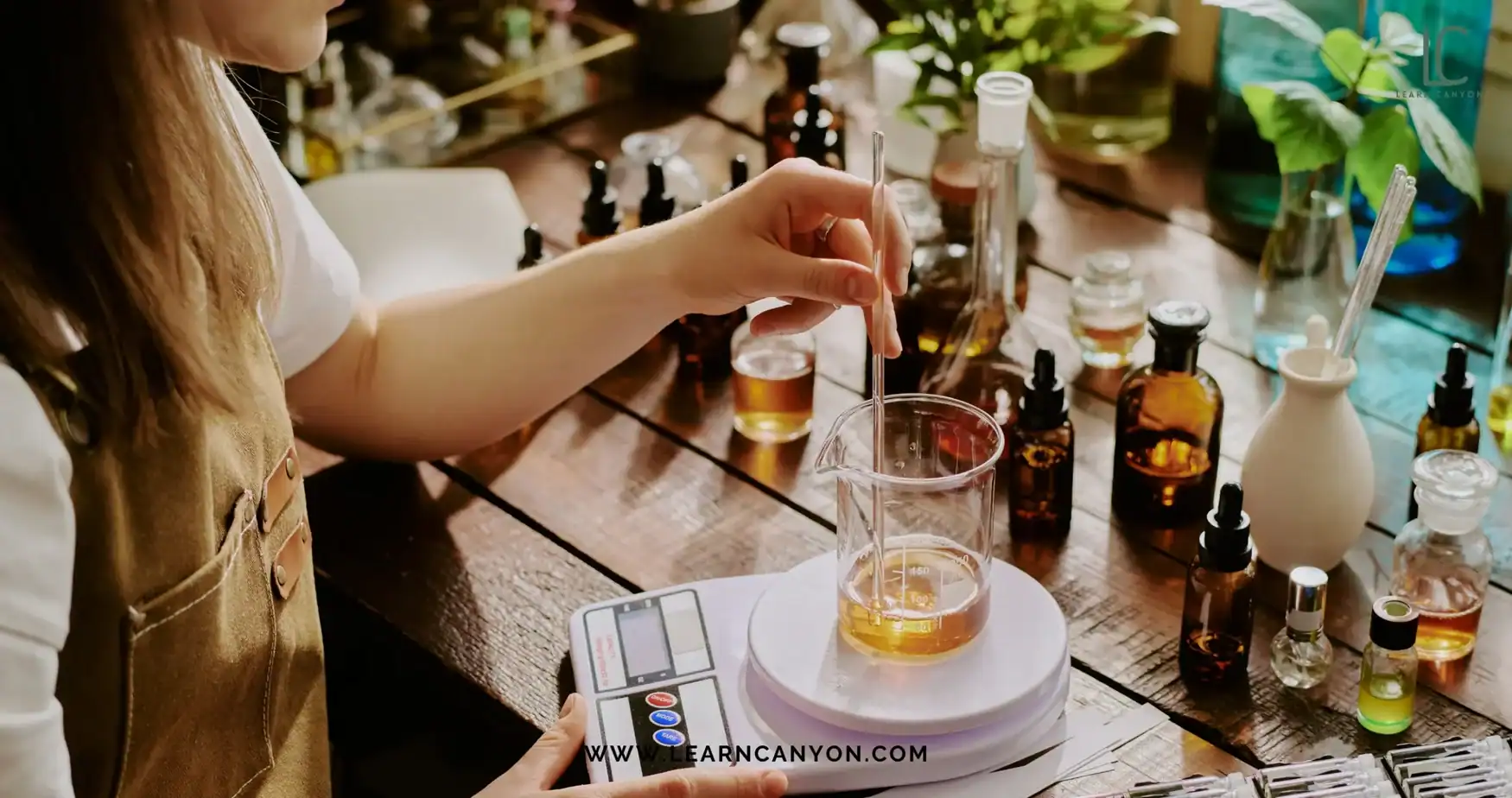
Now Understand the Fragrances Pyramid: Top, Middle & Base Notes
Once you have your scent story in place, the next step is understanding how a fragrance actually unfolds on the skin.
Because here’s something most beginners don’t realize:
A fragrance doesn’t smell the same from the first sniff to the last.
It evolves just like a story with a beginning, middle, and end.
This evolution is what perfumers call the fragrance pyramid, and it’s made of three layers: top notes, middle notes, and base notes. Each plays a unique role, and together they create a scent that feels full, balanced, and long-lasting.
Let’s break it down in a simple way:
Top Notes:
Top notes are the bright, fresh, sparkling aromas that greet you the moment you smell a product. They’re your “hello” notes the part that catches attention instantly.
Think:
citrus (lemon, bergamot, grapefruit)
minty tones (peppermint, eucalyptus)
herbal freshness (lemongrass, litsea cubeba)
These notes evaporate quickly usually within 15–30 minutes but they set the mood. Even though they don’t last long, they are essential for creating a beautiful opening.
It’s like the first line of a book.
If it grabs you, you’re hooked.
Middle Notes:
Once the top notes fade, the middle notes step in.
These are also called heart notes because they form the main character of your fragrance the part that stays with you the longest during wear.
Think of them as the bridge between the freshness of the top and the depth of the base.
- Common middle notes include:
- lavender
- geranium
- rosemary
- chamomile
- jasmine
- clary sage
These notes tend to be rounder, smoother, and more emotionally expressive. They give the fragrance its character whether that’s floral, herbal, comforting, or romantic.
If top notes are the opening scene of a movie, middle notes are the storyline that keeps you watching.
Base Notes:
Now we get to the deep, grounding notes, the ones that linger for hours.
Base notes are slow-to-evaporate oils that anchor your entire fragrance. They’re warm, rich, earthy, resinous, or woody.
- Popular base notes include:
- sandalwood
- vetiver
- patchouli
- benzoin resin
- vanilla oleoresin
- cedarwood
- myrrh
These are the notes that stay on the skin long after the top and middle notes fade. They also act like natural stabilizers, helping the lighter notes stick around a little longer.
If this fragrance were a house, base notes would be the foundation.
Without a strong base, the whole structure collapses your scent might smell amazing when mixed but disappear completely once added to a lotion or shampoo.
When you understand the fragrance pyramid, blending becomes so much easier. You’re no longer guessing.
You begin to think like a perfumer:
“I want a bright opening, so I’ll add citrus.”
“I need a soft floral heart, so lavender and geranium make sense.”
“I want longevity, so let me anchor this with vetiver and sandalwood.”
And suddenly the fragrance stops being a random mixture of oils…
It becomes a structured, sensory experience.
The pyramid also helps you troubleshoot.
If your scent fades too quickly → add stronger base notes.
If your scent feels too heavy → lighten with fresh top notes.
If something feels “unfinished” → rebalance the middle notes.
This is how you move from simply using essential oils…
to actually composing a fragrance.
Next Use Natural Fixatives for Longevity
Here’s a truth every natural formulator discovers sooner or later:
Essential oils are beautiful… but they can be fleeting.
You may create the most gorgeous blend fresh citrus, soft florals, a hint of herbs but once you add it into a lotion, hair serum, or butter, the scent fades faster than you expected.
Why?
Because essential oils are volatile.
They evaporate quickly, especially top and middle notes.
This is where natural fixatives come in and trust me, once you start using them, you’ll wonder how you ever formulated without them.
So now you may think, what exactly is a natural fixative?
Think of a fixative as the anchor of your fragrance.
Its job is to slow down evaporation, add depth, and help the entire blend last longer on the skin and in the product.
In simpler words:
Fixatives help your fragrance stay put.
Instead of disappearing in 10 minutes, your fragrance lingers… soft, warm, balanced.
And the best part?
Nature already provides several incredible fixatives that smell divine on their own.
Let’s explore a few favorites the ones that blend effortlessly with essential oils and elevate your fragrance from “nice” to “wow, what is that scent?”
1. Benzoin Resin
Warm, sweet, slightly vanilla-like.
Perfect for adding coziness to body butters, lotions, and oils.
It rounds out sharp citrus notes and gives florals a creamy finish.
2. Vetiver
Deep, earthy, grounding, and incredibly long-lasting.
Just a little bit can add richness to light, airy fragrances.
If you’re working with Ayurvedic or herbal blends, vetiver is a game-changer.
3. Patchouli
Don’t worry when used correctly, it doesn’t smell “earthy old hippie.”
Patchouli acts as a wonderful base that binds citrus, florals, and herbs together beautifully. It’s one of the most reliable fixatives in natural perfumery.
4. Vanilla Oleoresin
Warm, creamy, sweet.
It softens sharp edges and makes any fragrance feel inviting.
Especially beautiful in body oils, shimmer oils, and body creams.
5. Oakmoss Extract
Dark, forest-like, slightly powdery.
It adds sophistication and complexity perfect for luxury blends.
6. Amyris Oil
Often called “poor man’s sandalwood,” but honestly, it deserves its own spotlight.
It’s soft, woody, warm, and blends seamlessly into most formulations.
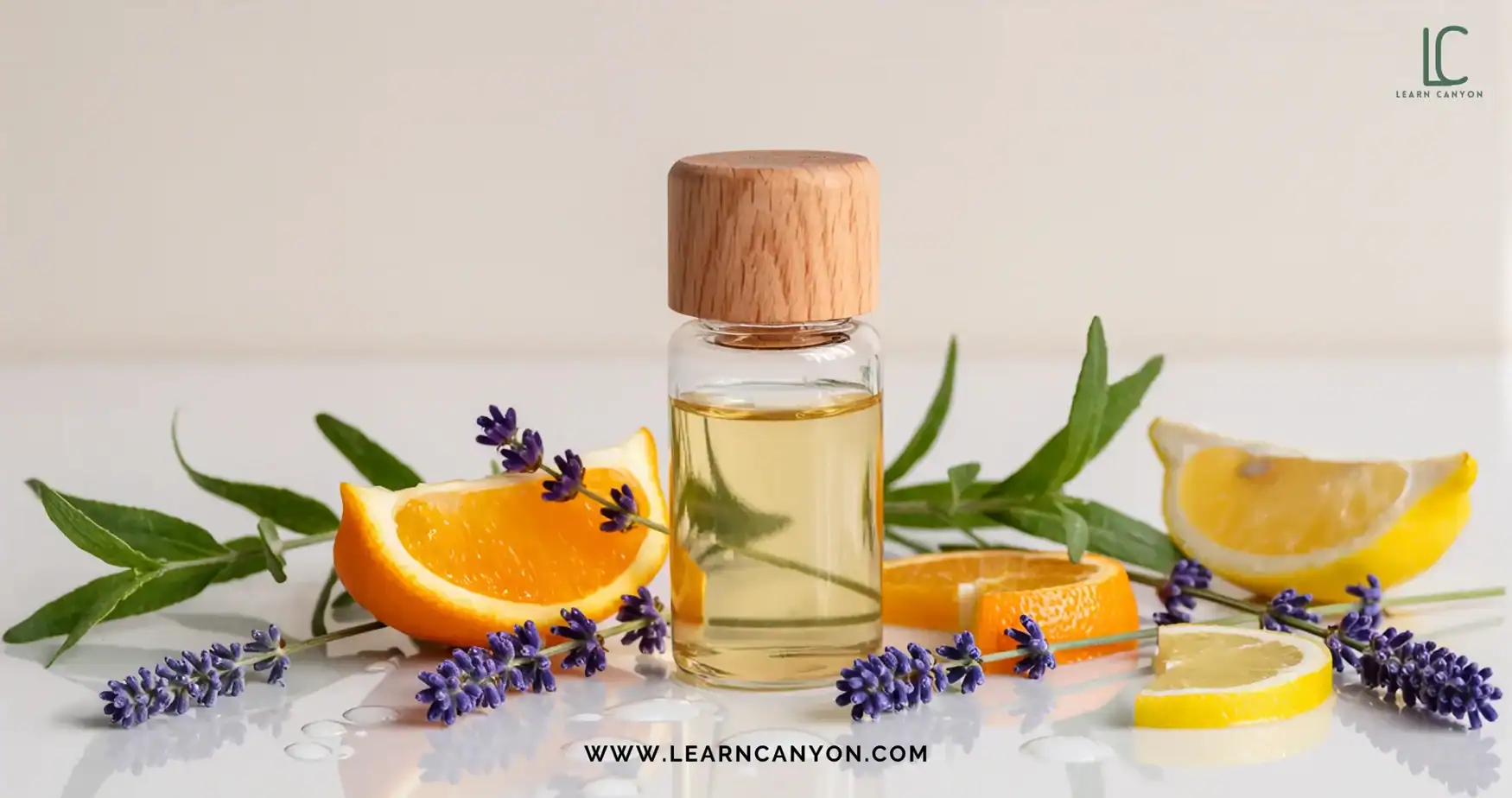
So how do fixatives actually help?
Here’s the fun part:
Fixatives don’t “stop” evaporation; they simply slow it down.
Imagine your fragrance as a symphony.
The top notes play the bright opening melody.
The middle notes carry the tune.
And the base notes your fixatives hold the final notes long after the song ends.
When you add a fixative:
✔ Citrus notes last longer
✔ Florals become smoother
✔ Herbs feel more polished
✔ The overall scent becomes more rounded and complete
It’s like giving your fragrance the support it needs to shine.
How Much Fixative Should You Use?
Use 1–5% of your total fragrance blend, not the total formula.
A little goes a long way.
If the blend feels heavy, reduce the fixative.
If it fades too quickly, increase it slightly.
Fixatives are all about balance.
A Quick Tip from Formulator to Formulator
Whenever a student tells me,
“Priya, my lotion smells amazing when I mix it, but after a day the scent completely disappears,”
my first question is:
“Did you use a fixative?”
Nine times out of ten, the answer is no.
If you want your natural fragrance to feel professional the way luxury organic brands do, fixatives are your secret ingredient.
They bring maturity, harmony, and longevity to your blend.
Start With a 30/50/20 Blending Ratio
Now that you understand your scent story and the fragrance pyramid, it’s time to actually start blending.
And this is where most people get overwhelmed they either add too much of something, or they just mix oils randomly and hope for magic.
But blending doesn’t have to feel like guesswork.
There’s a simple, reliable structure that perfumers use, and it works beautifully for skincare and haircare formulations too:
30% Top Notes → 50% Middle Notes → 20% Base Notes
Think of this as your fragrance “recipe foundation.”
You can tweak it later, but this ratio gives your blend balance from the very beginning.
Let’s break down why this ratio works so well.
Why 30% Top Notes?
Top notes are bright, sharp, and uplifting but they evaporate quickly.
If you use too many, your fragrance becomes too airy and fades within minutes.
If you use too few, the blend feels heavy from the start.
30% gives your fragrance that perfect sparkling opening without overpowering the deeper notes.
- Examples:
- Bergamot
- Sweet orange
- Peppermint
- Eucalyptus
- Litsea cubeba
They give the first impression but not the whole story.
Why 50% Middle Notes?
Your middle notes are the heart of your fragrance and that’s why they deserve the biggest chunk of your blend.
They provide:
✔ character
✔ harmony
✔ balance
✔ emotional depth
Without strong middle notes, a blend can feel hollow or incomplete.
- Examples:
- Lavender
- Geranium
- Clary sage
- Jasmine
- Rosemary
- Chamomile
These notes hold the blend together and make the scent feel full-bodied.
Why Only 20% Base Notes?
Base notes are powerful.
They’re deep, heavy, rich, and long-lasting but too much can anchor the fragrance so much that it becomes overwhelming or muddy.
20% is just enough to add longevity and warmth without weighing down your top and middle notes.
Examples:
- Sandalwood
- Vetiver
- Patchouli
- Vanilla oleoresin
- Benzoin resin
- Cedarwood
These notes linger for hours and make your fragrance feel complete.
How to Apply the 30/50/20 Method in Real Life
Let’s say you want a “fresh floral breeze” fragrance.
Your ratio might look like this:
- Top Notes (30%)
Bergamot + Litsea Cubeba - Middle Notes (50%)
Lavender + Geranium - Base Notes (20%)
Sandalwood + Vetiver
Now instead of randomly adding drops, you decide your total drop count let’s say 20 drops and distribute them based on the ratio:
- 6 drops top notes
- 10 drops middle notes
- 4 drops base notes
Suddenly, your fragrance isn’t chaos anymore it’s structured, balanced, and crafted with intention.
Here’s a formulator secret:
Don’t judge your blend immediately after mixing.
Essential oils need time to open up and merge with each other.
After 24 hours, the sharp edges soften, the base notes warm up, and the blend becomes much more harmonious.
If the top notes feel too sharp → reduce them.
If the blend feels too heavy → lighten with more middle notes.
If it fades too quickly → increase the base notes slightly.
This is where the art of perfumery begins.
A Tip for Beginners and Professionals Alike
Whenever you’re unsure how to build a blend, start with the 30/50/20 ratio.
It works for:
✔ shampoos
✔ conditioners
✔ lotions
✔ gels
✔ body oils
✔ facial serums
✔ butters
✔ natural perfumes
It keeps your blend balanced, predictable, and easy to adjust which is exactly what you need as a formulator.
With this foundation, you can slowly start bending the rules, experimenting with 40/40/20 or even 20/40/40 depending on your brand’s style.
But 30/50/20?
That’s your safest, most reliable starting point.
Always Follow Essential Oil Safety & IFRA Limits
Let’s talk about something extremely important and often overlooked when working with natural fragrances: safety.
It’s easy to get carried away when blending essential oils because they smell so beautiful and feel so “natural.”
But here’s the truth every professional formulator knows:
Natural does not automatically mean safe at any percentage.
Essential oils are highly concentrated plant extracts.
Some are phototoxic, some are sensitizing, and some have very strict dermal limits set by IFRA (International Fragrance Association).
So while creating fragrances is a creative process, it’s also a responsible one.
Let’s break it down in a simple, conversational way.
Why Do IFRA Limits Matter?
Think of IFRA guidelines as your formulation safety seatbelt.
They exist to make sure the final product:
✔ doesn’t irritate the skin
✔ doesn’t cause allergic reactions
✔ doesn’t increase sensitivity
✔ doesn’t trigger phototoxic reactions (especially citrus oils)
These limits are not meant to restrict your creativity they’re there to protect your customers and your brand.
And here’s the beautiful part:
When you follow the limits, your formulations feel professional, trustworthy, and safe.
Customers appreciate that.
Some Essential Oils Have VERY Low Limits
Many formulators don’t realize that some popular oils must be used sparingly often below 1%.
For example:
- Bergamot (non-FCF): ~0.4% max (phototoxic)
- Lemon, lime, grapefruit (cold-pressed): low limits
- Ylang-ylang: around 0.8% (can cause sensitivity)
- Cinnamon leaf: ~0.6%
- Clove, oregano, thyme: must be used with extreme caution
On the other hand, some oils are very gentle and have higher allowable percentages like lavender, frankincense, or cedarwood.
Knowing this helps you blend smarter and safer.
How Much Fragrance Should You Use in Different Products? (Using Essential Oils & Extracts)
A good rule of thumb for natural skincare and haircare:
- Face products: 0.5–1%
- Haircare: 1–2%
- Body butters, oils, lotions: 1.5–3%
- Rinse-off products: up to 3% (depending on the formula)
These numbers keep your formulations pleasant, subtle, and safe for daily use especially important for sensitive or barrier-compromised skin.
Watch Out for Phototoxic Citrus Oils
Cold-pressed citrus oils can make the skin extra sensitive to sunlight.
This means users can develop redness, dark patches, or irritation if they apply the product and then go out into the sun.
If you want a citrus scent, choose:
- Steam-distilled lemon
- Bergamot FCF (furocoumarin-free)
- Steam-distilled sweet orange
- Litsea cubeba (very lemony and stable)
These give you the bright citrus vibe without the phototoxicity.
Patch Testing Still Matters
Even if you stay within safe limits, always patch test your final product.
Why?
Because ingredients interact.
A formula with AHA, niacinamide, retinoids, herbs, or alcohol may feel different on the skin when paired with essential oils.
Testing ensures:
✔ the scent doesn’t fade
✔ the fragrance doesn’t distort
✔ the product doesn’t sting or irritate
✔ the final user experience is comfortable
This is how professional formulators refine their blends.
A Little note for you all
Whenever you feel tempted to add “just a bit more” essential oil because it smells good in your beaker pause.
Remember that once the product is applied to warm skin, that scent becomes much stronger.
Most luxury skincare brands actually use very low fragrance percentages something your customers subconsciously appreciate.
Natural fragrance should enhance your product, not overpower it.
In Short…
Follow IFRA limits.
Respect dermal safety.
Use the minimum effective amount.
And blend with intention, not impulse.
Your skin, your customers, and your formulations will thank you.
Test the Fragrance in the Final Formula
This is one of the most overlooked yet most important steps in natural fragrance development.
And honestly, it’s where most beginner formulators go wrong.
You can create the most beautiful fragrance blend in your little test bottle…
but once you add it to the actual product, everything can change.
Why?
Because formulas have personalities too.
And just like people, some ingredients get along beautifully with your fragrance… while others clash, overpower, mute, or distort it.
Let’s talk about why testing in the final formula matters and how to do it right.
Your Fragrance Will Smell Different in Every System
A scent sitting alone in a glass vial is like a singer performing solo pure, clear, and unaltered.
But once you add that fragrance into:
- a lotion (emulsion system)
- a gel (water-based system)
- a body butter (anhydrous system)
- a shampoo (surfactant system)
- a hair oil (lipid-rich system)
…it’s suddenly performing with a whole orchestra of ingredients.
The interaction changes everything.
For example:
- Emulsions tend to soften and dull bright top notes.
- Surfactants can make florals smell sharper or “soapy.”
- Butters like cocoa butter can completely overpower delicate scents.
- Herbal extracts (especially Ayurvedic ones like bhringraj, neem, or fenugreek) can take the fragrance in a totally different direction.
- Oils with strong aromas (tamanu, black cumin, moringa) can compete with your blend.
So if your fragrance smells magical in isolation but strange in your lotion don’t panic. It’s normal.
You just need to test, adjust, and rebalance.
How to Test Your Fragrance Properly
Here’s the most reliable approach:
1. Start With a Small Batch
Don’t waste ingredients.
Make a 50 g or 100 g batch and add your fragrance at the percentage you plan to use.
2. Add the Fragrance in the Cool-Down Phase
Heat can distort delicate top notes.
Always add your blend at < 40°C unless your formula requires otherwise.
3. Mix Well & Let It Rest for 24–48 Hours
Fragrances need time to settle into the formula.
What smells strong or harsh at first often softens beautifully after a day.
4. Re-Smell at Different Stages
✔ Immediately after mixing
✔ After 24 hours
✔ After 48 hours
✔ After 1 week (optional but ideal)
You’ll be shocked how much a fragrance evolves.
5. Check for Compatibility Issues
Observe:
- Does the scent disappear?
- Is it being masked by raw ingredients?
- Has it turned sour, stale, metallic, or “off”?
- Is the formula discoloring?
- Is the viscosity changing?
- Does the product now irritate the skin?
These clues help you fine-tune the blend or tweak the ratios.
This Step Helps You Troubleshoot Like a Pro
If your scent fades too quickly:
→ Increase middle or base notes.
→ Add a fixative.
→ Reduce overpowering carrier oils (like neem or tamanu).
If your scent becomes too sharp:
→ Reduce top notes like eucalyptus or mint.
→ Add soft florals or vanilla-type notes.
If your scent smells “muddy”:
→ You may have too many heavy base notes.
→ Lighten with a clean citrus or herbal note.
If your scent is completely missing in the final product:
→ Increase fragrance percentage slightly (within IFRA limits).
→ Evaluate whether the formula is too fatty or too active-heavy.
This is real formulation work observing, adjusting, testing again.
It’s what separates DIY blends from professional, market-ready fragrances.
Also
Most formulators don’t find their perfect fragrance in the first attempt.
Sometimes not even the second.
But once you learn how your formula behaves what it absorbs, what it enhances, what it dampens you start creating fragrances that feel tailor-made for your products.
That’s when your brand begins to develop a signature aroma that customers recognize instantly.
And that, truly, is magic.
Choose Carrier Ingredients That Don’t Interfere
Here’s something many new formulators don’t realize:
Your fragrance blend is only half the story. The ingredients you blend it into play a massive role in how it ultimately smells.
Just like how certain foods enhance or overpower spices, your skincare and haircare base can either complement your fragrance beautifully… or completely swallow it.
So as much as we focus on essential oils, notes, and fixatives, it’s equally important to choose carrier ingredients oils, butters, waxes, and extracts that don’t fight with your fragrance.
Let’s unpack this in a friendly, practical way.
Read the article: How to Choose Ideal Carrier Oils for Organic Skincare Products
Some Ingredients Are Naturally “Quiet”
These oils have little to no natural scent, which makes them ideal for showcasing your fragrance blend.
Think of them as the blank canvas of your formulation.
Neutral, non-interfering oils:
- MCT oil (fractionated coconut oil) lightweight, odourless, perfect for perfumes and hair oils.
- Jojoba oil mildly nutty but very gentle; adapts beautifully to most fragrances.
- Squalane almost completely scent-free and makes the fragrance feel luxurious.
- Apricot kernel oil subtle, soft, supportive.
- Sweet almond oil slightly nutty but generally easy to work with.
These oils allow your fragrance to shine without competition.
Some Oils Come With Strong Personalities of Their Own
And that’s not a bad thing it’s just something to be aware of.
Certain carrier oils have bold natural aromas.
If your fragrance is delicate or floral, these oils may overpower it or change its direction entirely.
Strong-smelling oils include:
- Neem oil extremely pungent; hard to mask even with strong fragrances.
- Tamanu oil nutty and earthy; can darken florals or citrus scents.
- Black cumin seed oil spicy and intense; best for herbal or grounding blends.
- Moringa oil slightly earthy, can shift delicate top notes.
- Coriander seed oil warm and spicy, might alter floral blends.
If you’re formulating with these, it’s better to choose fragrance directions that complement them.
For example:
- Use neem in Ayurvedic, earthy, herbal blends not floral ones.
- Pair tamanu with grounding scents like vetiver, patchouli, frankincense.
- Avoid pairing strong oils with fragrances that rely heavily on top notes.
Butters Matter Too
Butters are rich and beautiful but some come with their own natural aroma.
Cocoa butter
Strong chocolate scent → great for warm vanilla blends, terrible for citrus-floral ones.
Shea butter
Nutty and rich → can mute light scents unless refined.
Mango butter
Neutral and light → fantastic for scented butters.
So if you want your fragrance to smell clean, fresh, or citrusy… cocoa butter may not be your best friend.
Extracts, Active Ingredients & Herbal Additions Can Also Interfere
Herbal and Ayurvedic ingredients carry powerful natural scents.
Depending on your fragrance goal, this can either become an obstacle or an opportunity.
Strong-smelling botanical ingredients include:
- Bhringraj extract
- Fenugreek extract
- Amla extract
- Green tea extract
- Rosemary extract
- Saweed extracts
If you’re making:
- A summer citrus lotion, these herbs may complicate your fragrance.
- A deeply Ayurvedic hair oil, they’ll enhance your story beautifully.
Work with the natural scent of your ingredients, not against them.
A Simple Rule to Remember
The stronger the base ingredients smell, the simpler your fragrance blend should be.
Why? Because you’re not building a fragrance from scratch you’re layering onto an existing scent.
With neutral ingredients → you can create complex, layered fragrances.
With bold ingredients → stick to deeper, more grounding scents that harmonize easily.
A Formulator’s Tip for Perfecting This Step
Whenever you work with a strong-smelling oil or extract:
- Smell it alone.
- Smell it with your fragrance blend’s base notes.
- Try adding a tiny amount of middle note or citrus and see how it shifts.
This quick test can save you from creating a full batch that smells completely different from what you imagined.
Your base ingredients are the quiet partners in your fragrance creation.
Choose them wisely, and your blend will shine effortlessly.
Choose them without intention, and your fragrance may never smell the way you intended.
Fragrance formulation isn’t just about essential oils it’s about harmony, balance, and synergy with your entire formula.
Maintain a Fragrance Development Journal
If there’s one habit that separates casual DIYers from true cosmetic formulators, it’s this:
they document everything.
And when it comes to fragrance creation where the smallest tweak can completely transform the final aroma keeping a Fragrance Development Journal is not just useful… it’s essential.
Think of it as your personal perfume lab diary.
Your creative space.
Your record of discoveries, experiments, failures, improvements, and signature breakthroughs.
Let’s walk through why this journal matters so much and how to use it effectively.
Why Keep a Fragrance Journal?
Because fragrance is subtle.
It’s emotional.
It evolves over time.
And your memory simply can’t store every ratio, every note, every change, every variation of every blend you try.
A journal helps you:
✔ track what worked and what didn’t
✔ avoid repeating mistakes
✔ identify patterns in your preferences
✔ understand how scents shift in formulas
✔ recreate your successful blends with precision
✔ build your brand’s signature scent library
Over time, this becomes one of your most valuable formulator assets with ideas, combinations, improvements, and ready-to-use blends you’ve personally refined.
What Should You Record?
Here are the exact details experienced formulators always write down:
1. The Date & Batch Number
So you can trace your experiments chronologically.
2. The Fragrance Direction
Example:
“Fresh summer breeze with soft florals”
“Warm vanilla citrus for body butter”
“Herbal grounding blend for Ayurvedic hair oil”
This keeps your intention clear.
3. The Ingredient List (With Drops or Percentages)
Document every essential oil, extract, or fixative used.
Even if it’s just “1 drop of vetiver” write it down.
Tiny adjustments matter.
4. The Fragrance Pyramid Structure
Note which oils were top, middle, or base.
This helps you understand how the scent evolves.
5. The Initial Impression (Freshly Mixed)
How does it smell right away?
Sharp? Sweet? Muted? Overpowering?
Even though this changes, the first impression is useful for comparisons.
6. The 24-Hour, 48-Hour & 1-Week Evaluation
This is where the magic happens.
Fragrances evolve, soften, and reveal deeper notes over time.
Record how the scent changes after it rests.
7. How It Behaved in the Final Formula
Did the lotion mute the scent?
Did the shampoo distort it?
Did the hair oil soften or darken it?
This tells you which blends suit which product types.
8. Adjustments You’d Make Next Time
This is gold.
This is how your blends improve with each test.
9. Final Verdict
- Keep?
- Modify?
- Scrap?
- Try in a different base?
Your future self will thank you for this clarity.
What This Journal Eventually Becomes
If you’re consistent, within a few months your journal becomes:
- a library of unique fragrance concepts you can reuse
- a signature scent bank for your brand
- a reference for what works in which formulations
- your personal guidebook for blending
- a professional archive you can revisit years later
Most formulators don’t realize this, but luxury brands have internal fragrance journals that document every tiny change and this is what gives them consistency and identity.
Your journal does the same for you.
A Simple Example Page
Blend Name: Golden Glow – Version 2
Date: 12 August
Goal: Warm, sweet, citrus-floral scent for a body oil
Blend Ratio:
- Sweet orange – 40%
- Ylang-ylang – 20%
- Geranium – 20%
- Benzoin resin – 10%
- Sandalwood – 10%
Initial Impression:
Bright, sweet, slightly sharp top note. Warm base note emerging.
After 24 Hours:
Sharper citrus softened. Blend feels smoother and sweeter.
After 48 Hours:
Ylang-ylang and sandalwood have merged beautifully. Very balanced.
Tested In: MCT-based shimmer oil
Result: Perfect longevity. Top notes still present after 2 hours.
Next Time: Reduce geranium by 5% if used in creams.
This one-page summary makes it so easy to recreate or improve the blend.
Your fragrance journal is more than a notebook.
It is your creative history.
Your technical reference.
Your fragrance laboratory in written form.
And years from now, when your brand has established signature scents, this journal will be the place where those stories were born.
Ready-to-Use Natural Fragrance Concepts for Your Brand
Now that you understand how to build a scent story, structure a fragrance pyramid, use fixatives, and test blends professionally…
let’s bring it all together with some ready-to-use natural fragrance concepts you can try immediately.
These blends are crafted with the same approach used by high-end clean beauty and Ayurvedic-inspired brands.
They’re versatile, elegant, IFRA-considerate, and work wonderfully in skincare and haircare formulations.
Each one has a purpose, a personality, and a mood so you can choose the one that aligns with your product’s story.
1. Clean Summer Breeze
Fresh, soft, uplifting the kind of scent that feels like crisp morning air.
If your brand leans toward minimalist, refreshing, “clean girl aesthetic” formulations, this fragrance fits like a dream.
Fragrance Profile:
- Top Notes: Bergamot, Sweet Orange
- Middle Notes: Lavender, Geranium
- Base Notes: Cedarwood, Vanilla Oleoresin
Why it works:
✔ Feels universally appealing gender-neutral and seasonless
✔ Clean but not harsh, floral but not sweet
✔ Perfect for lotions, gels, shampoos, face mists, and gentle cleansers
How it smells:
Imagine fresh linen drying in the sun, softened with a hint of lavender fields and finished with a warm, comforting vanilla whisper.
It’s fresh, airy, and incredibly soothing.
2. Botanical Spa Ritual
Earthy, herbal, grounding like walking into a luxury Ayurvedic spa.
If your brand is rooted in herbs, botanicals, or wellness rituals, this blend instantly elevates the experience.
Fragrance Profile:
- Top Notes: Soft citrus (optional)
- Middle Notes: Lavender, Geranium
- Base Notes: Frankincense, Patchouli, Vetiver
Why it works:
✔ Pairs beautifully with herbal extracts (neem, amla, bhringraj)
✔ Feels luxurious, warm, and sophisticated
✔ Excellent choice for hair oils, masks, Ayurvedic creams, or massage blends
How it smells:
Think warm spa towels, incense resins, steam rooms, and grounding earthiness.
It’s calming, soulful, and perfect for self-care rituals.
3. Golden Glow
Sweet, bright, feminine perfect for body oils, butters, and glowing skincare.
This is the blend for brands that want something youthful, warm, and instantly lovable.
Fragrance Profile:
- Top Notes: Sweet Orange
- Middle Notes: Ylang-Ylang, Rose Geranium
- Base Notes: Benzoin Resin, Sandalwood
Why it works:
✔ Floral without being overwhelming
✔ Brightened with juicy citrus
✔ Softened with creamy, resinous warmth
✔ Perfect for shimmer oils, glow serums, and body lotions
How it smells:
A dreamy mix of sunshine, flowers, softness, and sweetness but in a chic, not sugary, way.
Radiant, warm, and absolutely addictive.
4. Coastal Herb Mist (Bonus Concept)
Cool, breezy, marine-herbal ideal for refreshing mists and lightweight creams.
Fragrance Profile:
- Top Notes: Eucalyptus, Lemon Myrtle
- Middle Notes: Rosemary, Lavender
- Base Notes: Cedarwood
Why it works:
✔ Feels clean and energizing
✔ Great for unisex or men’s grooming lines
✔ Perfect for face mists, toners, and gels
How it smells:
Like standing near the shoreline salty wind, fresh herbs, and cool air.
5. Warm Forest Honey (Bonus Concept)
Earthy, sweet, grounding inspired by forest woods and warm resins.
Fragrance Profile:
- Top Notes: Bergamot (light)
- Middle Notes: Clary Sage, Herbaceous Florals
- Base Notes: Benzoin, Myrrh, Patchouli
Why it works:
✔ Invokes warmth, comfort, and nature
✔ Perfect for winter collections, balms, and body creams
How it smells:
Warm woods, soft amber, a hint of sweetness like a forest hugged by sunlight.
How to Use These Blends in Your Formulations
For best results:
- Use 0.5–1% in face products
- 1–2% in haircare
- 2–3% in bodycare
- Always check IFRA dermal limits
- Always test in the final formula (because every base behaves differently)