Let’s start with a truth that every skincare formulator, and every skincare lover, should live by: hydration is non-negotiable.
Whether you’re working with dry, oily, mature, or sensitive skin, hydration is what keeps the skin functioning optimally. It’s not just about making skin look dewy, it’s about helping it perform at its best. Proper hydration supports the skin barrier, enhances elasticity, reduces sensitivity, and yes, gives that beautiful bounce we all adore.
As a formulator, I always remind my students and clients that before we chase glow, anti-aging, or even acne relief, we need to ask one thing first: is the skin well-hydrated?
Because here’s the thing, dehydrated skin is stressed skin. It compromises everything else we’re trying to fix. And while water is essential, it’s not enough. Our formulations need to include ingredients that actually bind, attract, and retain water within the skin layers.
In this blog, we’re diving into the most effective hydrating ingredients we use in professional skincare formulation, and how to choose and pair them like a pro.
What Does Hydration Actually Mean for Skin?
Let’s clear something up right away, hydration and moisturization aren’t the same thing. I see this confusion all the time, even among seasoned skincare enthusiasts.
Hydration is all about water, getting it into the skin and keeping it there. Moisturization, on the other hand, is about sealing that water in, usually with oils, butters, or occlusives. Both are crucial, but they work very differently.
Now, here’s where it gets interesting for us formulators: skin doesn’t just need water poured on it (sorry, spritzing plain rose water isn’t going to cut it). It needs humectants, those magical ingredients that attract and bind water to the skin’s surface. Think hyaluronic acid, glycerin, sodium PCA… the unsung heroes of supple, happy skin.
But hydration isn’t just a surface-level affair. Our goal is to support the skin’s natural moisture barrier, so it doesn’t just feel hydrated for a few hours, but actually functions better long-term. That’s where ingredient choice, molecular size, and delivery systems come into play.
So when we talk about hydration in skincare formulation, we’re talking about more than just a refreshing feel, we’re talking about skin health at a cellular level. And when you get that right? Everything else, glow, clarity, softness, follows.
Natural vs. Synthetic Hydrators – What Should You Choose?
Ah, the age-old debate: natural vs. synthetic. As a formulator who deeply respects the power of nature and the brilliance of cosmetic science, I say, let’s stop choosing sides and start choosing wisely.
Here’s the thing: both natural and synthetic hydrators can be incredibly effective. It’s not about one being “bad” and the other being “pure”, it’s about understanding how they work, how they feel on the skin, and what your formula truly needs.
Take glycerin, for example. One of the most common humectants in skincare, and yes, it can be both natural (plant-derived) or synthetic. Either way, it’s a hydration powerhouse. Then there’s sodium PCA, which mimics the skin’s own Natural Moisturizing Factors (NMFs). Lab-made? Often. But skin loves it.
On the other hand, we have beautiful botanical hydrators like aloe vera, cucumber extract, or tremella mushroom, which deliver water and soothing compounds in a more holistic way, perfect for sensitive or minimalist formulations.
My approach? I like to blend both worlds. For high-performance results, I may pair hyaluronic acid with inulin and beta-glucan. For a gentler, more sensory experience, I might lean into botanicals supported by a base of natural humectants.
So should you choose natural or synthetic? Choose what aligns with your formulation goal, target skin type, and of course, your brand ethos. The best formulas are built on intention, not just trends.
Top Hydrating Ingredients and Why They Work
Let’s get to the heart of it, the hydrating heroes we reach for again and again in skincare formulation. These are the ingredients that don’t just sound good, they actually deliver results when used correctly, at the right concentrations, and in the right combinations.
I’ve worked with each of these across gels, creams, mists, and serums, and trust me, they earn their place in a formulator’s toolkit.
Hyaluronic Acid
You knew this one was coming, right? It’s not overhyped, it’s versatile and powerful. What makes it special is its ability to hold up to 1000 times its weight in water. But here’s a little pro tip: different molecular weights = different skin layers. Low MW penetrates deeper, while high MW forms a nice hydrating film on the surface. I often blend them for layered hydration.
Glycerin
Simple, humble, and oh-so-effective. This one’s a classic humectant that attracts water to the outer layer of the skin. Some people shy away from it due to its sticky feel, but when used at the right percentage, and balanced with other ingredients, it works like magic.
Sodium PCA
This one’s part of the skin’s Natural Moisturizing Factor (NMF), and skin just drinks it up. It’s lightweight, non-sticky, and plays beautifully in toners, serums, and emulsions. If you’re formulating for sensitive or acne-prone skin, this is a brilliant go-to.
Beta-Glucan
An underrated gem. Not only does it hydrate, but it also soothes irritated skin and supports barrier repair. I love using this in post-sun or sensitive skin formulations. It gives that soft, calm feel that people instantly notice.
Panthenol (Pro-Vitamin B5)
A dual-action ingredient, it attracts water and also helps lock it in. Plus, it supports wound healing and strengthens the skin barrier. I always include this in formulations where hydration and recovery are the goal.
Tremella Mushroom Extract
Nature’s version of hyaluronic acid! Tremella holds water beautifully and has a jelly-like texture that gives skincare that luxurious, cushiony feel. It’s especially great in natural or minimalist formulations.
Urea
This one’s for the more advanced formulators. At 2–5%, urea is a humectant. At 10% and above, it becomes keratolytic (helps exfoliate). It hydrates deeply and is ideal in formulations for dry, rough, or mature skin.
Saccharide Isomerate
Known as a “moisture magnet,” this ingredient binds to skin like a sticker and keeps hydration locked in for up to 72 hours. It’s great in serums and moisturizers that need a longer-lasting hydrating effect.
Inulin
A plant-based prebiotic that also acts as a gentle humectant. It helps support the skin microbiome while hydrating, which makes it a win-win in barrier-care and minimalist formulas.
Polyglutamic Acid
The new darling of hydration! It holds even more water than hyaluronic acid and forms a breathable film that prevents transepidermal water loss. I especially love this in overnight masks and glow-boosting serums.
Each of these ingredients brings something unique to the table, and when you blend them thoughtfully, that’s when your formulation truly comes to life.
Formulator’s Tip – Pairing Hydrators for Maximum Effect
If there’s one thing I’ve learned in all my years formulating, it’s this: hydrators work better together. On their own, they’re good. But when paired with intention? They become skin-transforming.
Let me explain.
You’ve probably seen hyaluronic acid splashed across every label these days, but here’s a little secret: HA alone isn’t enough. In fact, without proper support, it can sometimes pull moisture out of the skin if the air is dry. That’s why pairing it with complementary ingredients like glycerin or panthenol makes a huge difference.
Here’s a few of my favorite hydration duos (and trios!) that I use all the time:
Hyaluronic Acid + Glycerin + Panthenol
This is my go-to trio for water-based serums. Glycerin brings the moisture, HA holds it, and panthenol locks it in while soothing the skin barrier. Balanced. Effective. Loved by all skin types.
Beta-Glucan + Sodium PCA
For sensitive or irritated skin, this combo is gentle yet powerful. Think of it like a hydrating hug, plumping, calming, and barrier-repairing.
Tremella Extract + Saccharide Isomerate
I call this the “long-wear hydration” duo. Tremella gives that plump, hydrated bounce while saccharide isomerate keeps moisture locked in for hours. Great for overnight masks or rich creams.
Polyglutamic Acid + Urea (low %) + Inulin
This one’s for advanced hydration with microbiome benefits. PGA forms a water-locking film, urea adds deep hydration and mild exfoliation, and inulin supports the skin barrier. I love this blend in barrier creams or post-treatment care.
The key to pairing hydrators is understanding how they behave, what their texture is like, how they interact with water and oil phases, and what skin types they’re best suited for. It’s a beautiful balance of science and art.
So the next time you’re building a hydrating formula, don’t just toss in one humectant and call it a day. Layer your hydrators smartly, and your formula will feel luxurious, absorb beautifully, and deliver results that clients rave about.
Ayurvedic Hydrators Making a Comeback
There’s something timeless about Ayurveda, it never really went out of style. But what’s exciting today is how Ayurvedic hydrators are making a strong, science-backed comeback in modern skincare.
And as a formulator who believes in both tradition and innovation, I can’t help but smile seeing this beautiful fusion take center stage.
Let’s talk about a few Ayurvedic ingredients that have always been hydrating powerhouses, long before hyaluronic acid became the buzzword.
Aloe Vera (Kumari)
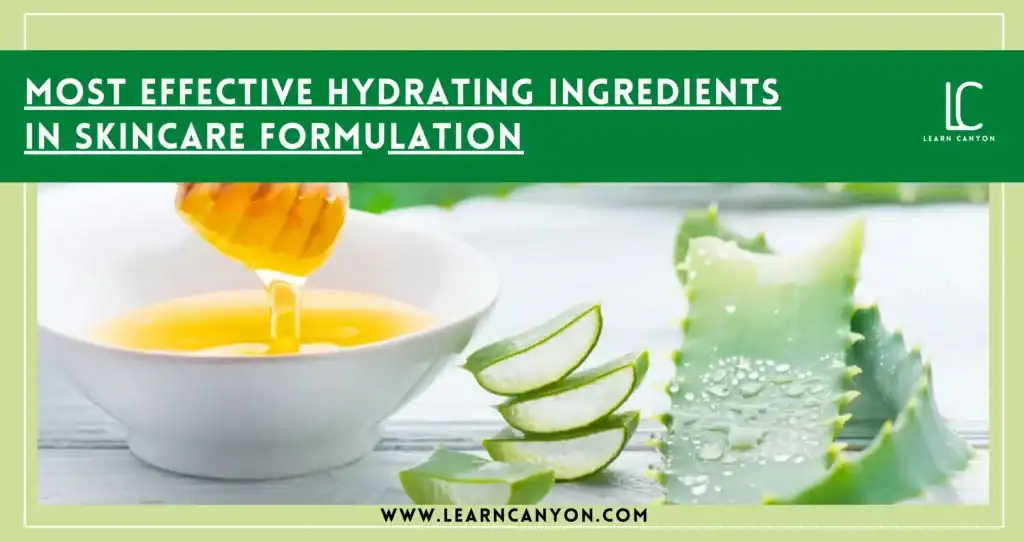
A classic, and for good reason. Known as Kumari in Ayurveda (which literally means “young girl”), aloe vera symbolizes youthfulness and renewal. It delivers water directly into the skin while calming inflammation, redness, and sensitivity. I love using aloe as a base for gels and emulsions, it’s soothing, balancing, and instantly hydrating.
Rose Water
Rose isn’t just for fragrance, it’s a gentle hydrator with mild astringent properties, making it ideal for pitta skin types. It helps maintain pH balance while delivering a refreshing moisture boost. When paired with glycerin or panthenol in a toner? Absolute magic.
Cucumber Extract
While not strictly Ayurvedic in origin, cucumber has long been used in Indian home remedies. It’s rich in water and vitamin C, making it perfect for puffiness, dehydration, and that instant ‘cooling’ feel. It’s also amazing in eye gels and light moisturizers.
Licorice Root (Yashtimadhu)
This isn’t just a brightener, it hydrates while calming skin and improving barrier function. It works beautifully in formulas for sensitive or rosacea-prone skin, and it’s a staple in Ayurvedic skin rejuvenation therapies.
Manjistha + Honey
Manjistha is often used in detox and blood-purifying treatments, but when combined with humectants like honey, it can hydrate and heal beautifully. Honey, especially raw or forest honey, is deeply hydrating, antimicrobial, and an incredible emollient in masks and balms.
The beauty of Ayurvedic hydrators lies in their multi-functionality, they hydrate, heal, soothe, and often carry antioxidant or anti-inflammatory benefits as well. And when they’re paired with modern humectants like sodium PCA or beta-glucan? You get the best of both worlds.
So yes, these ancient heroes are making a comeback, not as trends, but as time-tested allies in skincare. And it’s our job as modern formulators to respect their legacy while giving them new life in effective, stable, and skin-loving formulations.
How to Include Hydrators in Different Formulas
Now that we’ve talked about the what, let’s dive into the how. Because knowing your hydrators is one thing, but understanding where, when, and how to use them in different types of formulations? That’s where your skills as a formulator truly shine.
Every product format has its own structure, purpose, and delivery system, and that means your hydrating ingredients need to be carefully selected and placed with intention.
Let me walk you through some of the most common types of formulas:
Water-Based Serums
This is where humectants like hyaluronic acid, glycerin, panthenol, sodium PCA, and beta-glucan really get to shine. These formulas are usually lightweight, fast-absorbing, and perfect for layering. Use water-soluble hydrators in your water phase and ensure your pH stays in the optimal range (especially for HA and urea). Think dewy, not sticky.
Gel-Based Products
For mists, toners, and gel moisturizers, you want a mix of hydration and soothing. Aloe vera, rose hydrosol, cucumber extract, saccharide isomerate, and inulin pair beautifully here. Gums or gelling agents like HEC or xanthan help build texture while keeping the formula elegant and stable.
Creams and Emulsions
Hydrators in emulsions can be super powerful when paired right. You’ll typically add humectants like glycerin, panthenol, sodium lactate, or low-MW HA into the aqueous phase, while oils and occlusives go in the oil phase. Bonus: a touch of polyglutamic acid in the cool-down phase boosts water retention and gives a smooth, silky finish.
Overnight Masks & Barrier Balms
These are hydration treatments with staying power. Look for ingredients that offer both immediate hydration and long-term retention, beta-glucan, urea, polyglutamic acid, and tremella mushroom extract are amazing here. You can also emulsify a water-rich phase into a richer balm base for hybrid textures.
Cleansers and Rinsable Products
Yes, even these benefit from a dose of hydration! Glycerin, panthenol, and aloe vera juice help reduce stripping and improve the skin feel post-wash. It’s one of those subtle touches that separates a “meh” cleanser from a “wow” one.
Powder-to-Gel or Water-Activated Products
These are trending now, especially in the clean beauty space. Add freeze-dried aloe, powdered HA, or colloidal oat to activate upon mixing with water, great for masks and DIY-style products.
The golden rule? Always think about the product’s format, intended feel, skin type, and environment. And don’t forget: some hydrators (like HA) are pH-sensitive, and others (like urea) need preservatives that can support them effectively.
Your job isn’t just to “add hydration”, it’s to craft an experience that nourishes skin while delivering on performance. That’s what makes your formulas memorable.
Sample Formulation – Priya’s Dewy Day Gel for All Skin Types
Let’s take everything we’ve talked about and turn it into something you can actually formulate! This is one of my all-time favorite beginner-to-intermediate formulas, a lightweight, hydrating day gel that suits all skin types (yes, even oily and sensitive!).
It’s bouncy, breathable, and leaves a subtle glow without feeling sticky or heavy. Perfect for layering under sunscreen or makeup, and gentle enough to use morning and night.
Ready? Let’s whip up some dewy goodness!
Priya’s Dewy Day Gel Formula
Phase A – Water Phase
- Distilled Water – Qs%
- Aloe Vera Juice (Organic) – 10.0%
- Glycerin (Plant-Based) – 4.0%
- Sodium PCA – 2.0%
- Beta-Glucan – 1.0%
- Panthenol (Vitamin B5) – 2.0%
- Saccharide Isomerate – 1.5%
- Xanthan Gum (Clear or Soft) – 0.3%
- Hydroxyethylcellulose (HEC) – 0.7% (optional, for silky gel texture)
Phase B – Cool Down
- Hyaluronic Acid (Low-MW, pre-hydrated at 1%) – 5.0%
- Preservative (e.g., Geogard Ultra or EcoCert-approved option) – As per supplier (typically 1.0%)
- Natural Fragrance or Essential Oil Blend – 0.5% (optional, for that spa-like finish)
Method
- Disperse the gums (Xanthan & HEC) in water first, whisk gently until fully hydrated, this forms your gel base.
- Add the rest of Phase A ingredients, one by one, stirring gently between each addition.
- Once everything is dissolved and fully mixed, allow to cool if needed (some humectants work better at room temperature).
- Add your cool-down phase: pre-hydrated hyaluronic acid, preservative, and fragrance if using.
- Check and adjust the pH to ~5.0–5.5 using lactic acid or sodium bicarbonate if needed.
- Bottle it up in an airless pump or glass jar, and voilà! You’ve got your own ultra-hydrating dewy day gel.
Why This Works
Every ingredient here is doing something on purpose:
- Aloe + Beta-Glucan soothe and comfort.
- Glycerin + Sodium PCA + Saccharide Isomerate deliver multi-layer hydration.
- Panthenol + Hyaluronic Acid support the moisture barrier.
- Xanthan + HEC create that soft, bouncy gel texture we love.
The result? A formula that feels light, absorbs fast, and keeps the skin hydrated throughout the day without clogging pores.
Mistakes to Avoid When Using Hydrating Ingredients
Let’s be honest, even the best hydrating ingredients can fall flat if they’re not used correctly. I’ve seen so many well-intentioned formulas turn out sticky, unstable, or just… underwhelming. And I’ve made some of these mistakes myself when I was just starting out (we all do, it’s how we grow!).
So, if you want your formulas to feel luxurious and perform like a dream, here are some key mistakes to steer clear of:
1. Overloading Humectants
More isn’t always better. Ingredients like glycerin or sodium PCA can become sticky or attract moisture from the skin in low-humidity environments if used in high percentages. Balance is everything, combine them with occlusives or film-formers to keep that hydration sealed in.
2. Using Hyaluronic Acid Without Context
HA is a star ingredient, but it’s not a one-size-fits-all. Low molecular weight goes deep, high MW stays surface-level, and combining both gives a fuller effect. And remember, it doesn’t hydrate on its own. It needs a moist environment or paired humectants to really work.
3. Adding Hydrators at the Wrong Phase or Temperature
Some hydrators, like panthenol or saccharide isomerate, are heat-sensitive and should go in during the cool-down phase. Always check solubility and stability data before adding them to your heated water phase, or you might lose their magic.
4. Skipping the pH Check
Certain ingredients like urea and sodium lactate can be pH-sensitive. If your formula drops below or rises above the recommended range, you might cause irritation, or destabilize the product entirely. Always, always test and adjust.
5. Forgetting to Seal in the Hydration
Hydrating ingredients attract water, but if you don’t follow up with emollients or occlusives in the formula, that water can evaporate quickly (hello, transepidermal water loss). Think of it like watering a plant but forgetting to mulch, it dries right out!
6. Not Considering the Environment
Formulations that work beautifully in humid climates might not perform the same in dry or cold environments. If you’re selling globally or targeting a specific market, always consider climate + lifestyle when choosing your humectant blend.
The good news? Once you know these pitfalls, they’re easy to avoid. It just takes a little formulation finesse and awareness.
So next time you’re working with hydration, treat it like a delicate dance, not a flood. Your formula (and your clients’ skin) will thank you.
Conclusion
Let’s be real, hydration has become a bit of a buzzword lately. From “glass skin” to “slugging” to “dewy glow,” everyone’s chasing that plump, radiant look. But as formulators, we know that hydration isn’t just a trend, it’s the very foundation of healthy, resilient skin.
Behind every glow-up moment is a formula that’s been intentionally crafted with smart, synergistic ingredients, humectants that pull in water, emollients that soften, and film-formers that help lock it all in. It’s science, not just skincare fluff.
The beauty of hydration is that it’s universal. All skin types, dry, oily, combination, sensitive, benefit from it. And when you choose the right hydrators, in the right ratios, and in the right product format? You’re not just making something that feels nice, you’re supporting skin health at its core.
So whether you’re blending up your first water-based serum or formulating a luxe overnight gel cream, remember:
- Hydration isn’t optional.
- It’s not about hype, it’s about function.
- And most importantly, it’s your gateway to real results.
Keep formulating with intention. Keep choosing ingredients that serve a purpose. And let hydration be your skin’s best friend in every single formula.