You’ve probably come across hundreds of cosmetic recipes online.
A homemade moisturiser with just five ingredients. A DIY vitamin C serum that promises glowing skin. A body butter recipe that looks incredibly easy to make.
You save the recipe, order the ingredients, follow the instructions, and feel excited when your first product turns out beautifully.
But then you decide to make a small change.
Perhaps you want to replace an oil, adjust the texture, introduce a botanical extract, or make the product suitable for a different skin type.
And suddenly, you’re not sure what to do.
Will the new ingredient work with the others? Should you change the emulsifier? Will the preservative still be effective? Could the formulation become unstable?
This is where many beginners discover something important.
Knowing how to follow a cosmetic recipe isn’t the same as understanding how to formulate cosmetic products.
Now, this doesn’t mean cosmetic recipes are bad. They’re often a wonderful way to introduce yourself to the practical side of making skincare products.
But there’s a difference between successfully recreating an existing product and having the technical knowledge to develop, evaluate, and improve one.
And if you’re serious about learning cosmetic formulation, understanding that difference can completely change the way you approach your work.
Understanding the Difference Between Cosmetic Recipes and Professional Formulations
Let’s start with something simple.
A cosmetic recipe usually provides the ingredients, quantities, and instructions needed to make a particular product.
For example, you might come across a body butter recipe that tells you to melt shea butter, combine it with a botanical oil, allow it to cool, and whip it until fluffy.
You follow the steps, and you have a finished body butter.
A professional cosmetic formulation, however, involves much more than the instructions themselves.
It considers the scientific reasoning behind ingredient selection, appropriate concentrations, compatibility, manufacturing conditions, product performance, stability, and safety.
A Recipe Tells You What to Make. Formulation Knowledge Helps You Understand Why.
Imagine you’re preparing a facial moisturiser.
A recipe may tell you to use 5% glycerin, 10% botanical oils, and a certain percentage of emulsifier.
But why were those concentrations selected?
What would happen if you increased the oil phase? Could that influence the texture or stability? Would the existing emulsifying system still be appropriate?
These are the kinds of questions a formulator learns to investigate.
Professional formulation requires understanding not only what goes into a product, but how every ingredient contributes to the finished system.
A well-written recipe can absolutely be part of a professional formulation. The real difference isn’t whether something is called a recipe or a formula. It’s the level of scientific understanding, development, documentation, and testing behind it.
Why Following a Cosmetic Recipe Can Only Take You So Far
Let’s say you’ve found a recipe for a beautiful facial cream.
You’ve followed it several times, and each batch looks great.
Naturally, you start feeling more confident.
But one day, your supplier runs out of the emulsifier you’ve been using.
You find another ingredient described as an emulsifier and decide to substitute it at the same percentage.
The result?
Your cream feels different. Perhaps it becomes too thick, develops an undesirable texture, or begins separating during storage.
You followed almost the same recipe, so why didn’t it work?
Cosmetic Ingredients Aren’t Always Interchangeable
One of the biggest misconceptions beginners have is that ingredients performing similar functions can automatically replace one another.
Unfortunately, cosmetic formulation doesn’t work that way.
Two emulsifiers may have different chemical characteristics, processing requirements, and compatibility limitations.
The same applies to thickeners, surfactants, preservatives, oils, and active ingredients.
Replacing an ingredient can influence several characteristics of the finished product.
And without understanding those interactions, you may find yourself making repeated adjustments without knowing whether they’ll solve the problem.
Understanding Ingredient Function Changes Everything
Professional formulators look beyond ingredient names.
They consider why an ingredient is included and what contribution it makes to the overall formulation.
For example, when selecting an emollient for a moisturiser, you might consider its sensory characteristics, spreading behaviour, oxidative stability, and compatibility with the other components.
When selecting an emulsifier, you’d need to consider the type of emulsion, the oil phase, processing conditions, and the structure you’re trying to achieve.
This doesn’t mean you need to understand every cosmetic ingredient immediately.
It means gradually learning to make ingredient decisions based on evidence and formulation requirements rather than guessing.
The Role of Cosmetic Chemistry in Professional Formulation
If you’ve ever wondered why cosmetic chemistry matters so much, consider what happens inside an ordinary moisturising cream.
You have water, oils, emulsifying ingredients, humectants, preservatives, and perhaps botanical extracts or other active ingredients.
Each component has its own chemical and physical properties.
And when you combine them, they influence one another.
Emulsification Is More Than Mixing Oil and Water
One of the clearest examples is emulsification.
You probably already know that oil and water naturally separate.
To create a cream or lotion, formulators use an appropriate emulsifying system to help maintain a dispersed structure.
But successfully creating an emulsion involves much more than simply adding an emulsifier.
The concentration and type of emulsifier, oil phase composition, viscosity modifiers, temperature, mixing conditions, and cooling process can influence the finished product.
A recipe might tell you to heat two phases and combine them.
Formulation knowledge helps you understand why those phases are heated, what happens during emulsification, and which variables may affect stability.
pH, Solubility, and Compatibility Matter Too
Another important area is understanding how ingredients behave under different formulation conditions.
Some ingredients require a particular pH range. Others have specific solubility requirements or may interact with other materials.
For example, adding an electrolyte-rich ingredient to a formulation containing a sensitive thickening polymer could significantly change its viscosity.
Similarly, introducing an active ingredient without checking its recommended conditions may compromise its stability or the performance of the finished product.
Professional Formulations Require More Than Correct Ingredient Percentages
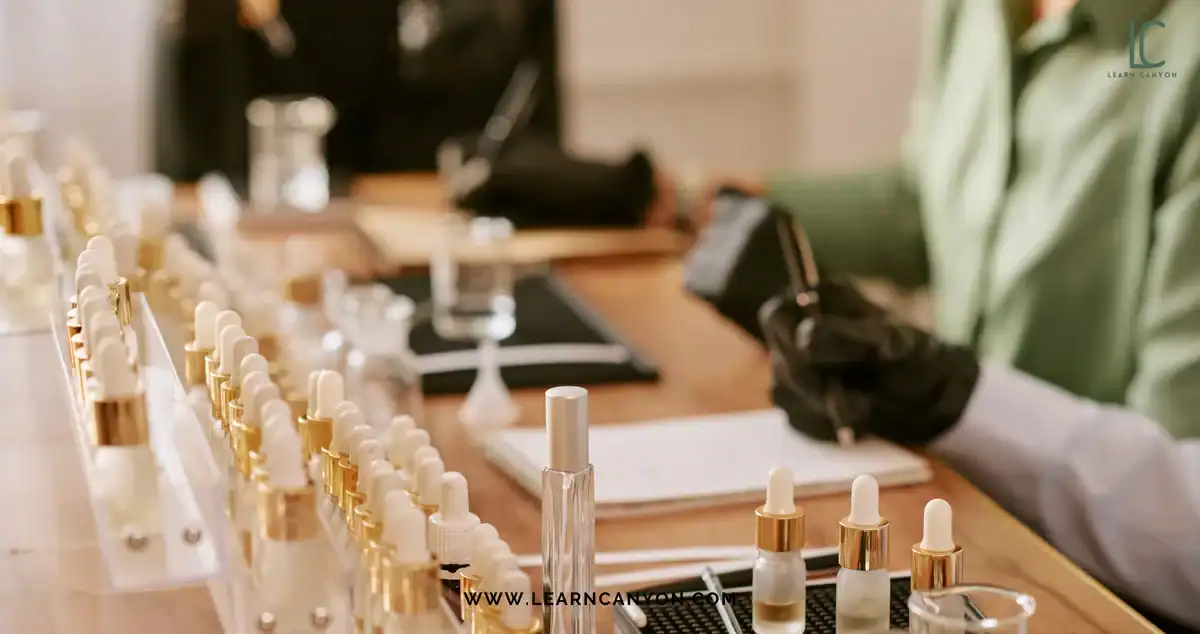
Have you noticed that professional cosmetic formulations are generally expressed in percentages?
Instead of measuring ingredients in teaspoons or tablespoons, formulators typically calculate their quantities by weight.
This allows them to maintain the intended ingredient proportions across different batch sizes.
But here’s something important.
A formula totalling 100% isn’t automatically a good formulation.
You can calculate every ingredient perfectly and still develop a product that is unstable, inadequately preserved, unsuitable for its intended use, or inconsistent between batches.
The Manufacturing Process Is Part of the Formulation
Imagine making the same cream using identical ingredients and percentages, but changing the mixing speed, heating temperature, or cooling process.
Depending on the formulation, you may notice differences in texture, viscosity, and emulsion characteristics.
That’s because manufacturing conditions can influence product structure.
Professional formulation documentation therefore goes beyond an ingredient list.
It typically includes the phases, percentages, raw material specifications, processing conditions, manufacturing instructions, quality checks, and observations.
These details help make the formulation reproducible.
Consistency Becomes Essential as You Progress
Making one successful 100 g sample is exciting.
But what happens when you need to manufacture the same product again?
Will it have the same texture? The same viscosity? The same pH, where applicable?
And what happens when you increase production from 100 g to several kilograms?
Scaling up isn’t always as simple as multiplying every ingredient by ten or a hundred.
Mixing efficiency, heating and cooling behaviour, equipment differences, and manufacturing conditions can influence the results.
Professional formulation development aims to understand and control these variables so that the finished product can be manufactured consistently.
Stability and Preservation: Where Professional Formulation Becomes Especially Important
Let’s imagine you’ve made a facial lotion using an online recipe.
It looks beautiful on the first day.
A week later, it still looks fine.
So you assume the product is stable and safe to use for several months.
But can you really know that just by looking at it?
Not necessarily.
A product’s appearance alone cannot confirm its microbiological quality, preservation effectiveness, or long-term stability.
A Beautiful Cream Isn’t Necessarily a Stable Cream
Cosmetic products can experience several types of instability.
An emulsion might separate, a balm may become grainy, a product may change colour, or its viscosity may shift during storage.
Some problems appear quickly. Others develop gradually under different environmental conditions.
Professional formulators investigate these risks through appropriate stability studies and systematic observation.
The specific tests depend on the product and its intended use.
Preservation Requires Scientific Evaluation
Preservation is another area where simply following a recipe may not provide enough information.
Water-containing cosmetic products generally require an appropriate preservation system because they can support microbial growth.
But choosing a preservative isn’t simply about adding the manufacturer’s recommended percentage.
You also need to consider the formulation’s pH, ingredient compatibility, packaging, and intended conditions of use.
Where applicable, preservation effectiveness is assessed through suitable microbiological testing, such as preservative efficacy testing.
This is particularly important when developing products intended for commercial sale.
A product being natural, handmade, or prepared using a popular recipe doesn’t eliminate the need to evaluate its safety.
Cosmetic Recipes vs Professional Formulations: A Practical Comparison
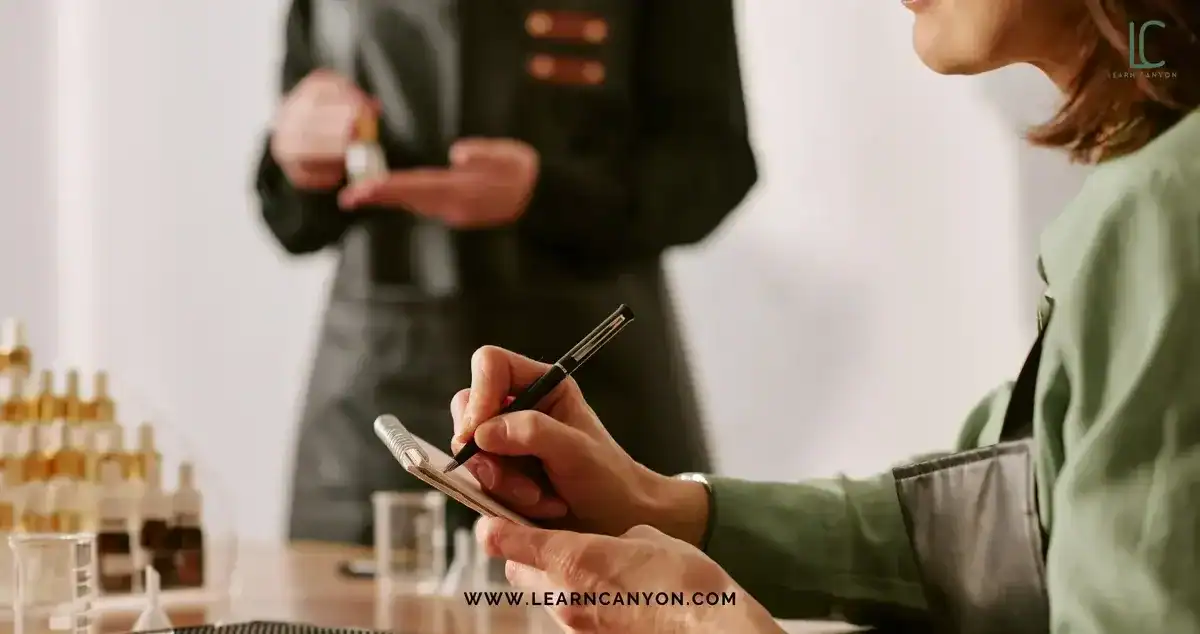
By now, you can probably see that the distinction goes beyond the number of ingredients or the complexity of the product.
Here’s a simple comparison.
| Basic Recipe-Based Approach | Professional Formulation Approach |
|---|---|
| Follows supplied ingredients and instructions | Explains and evaluates the function of each ingredient |
| May use fixed quantities without further analysis | Uses documented, scientifically justified concentrations |
| Depends on the original recipe for modifications | Evaluates ingredient substitutions and compatibility |
| May focus mainly on initial appearance | Considers stability, safety, performance, and quality |
| May contain basic mixing instructions | Documents appropriate processing parameters and controls |
| May lack formal validation | Includes testing and assessment suited to the product |
| May be difficult to troubleshoot independently | Uses systematic investigation and controlled trials |
This doesn’t mean that every homemade recipe lacks these elements, or that every formula labelled “professional” has been properly validated.
A professionally developed formulation can be straightforward and contain relatively few ingredients.
What matters is the quality of the development process and the evidence supporting the finished product.
Why Cosmetic Recipes Aren’t Enough When You’re Planning to Sell Products
For many aspiring formulators, making skincare starts as a hobby.
You enjoy experimenting with ingredients, creating new textures, and sharing your products with friends or family.
Eventually, you begin thinking about launching your own brand.
And that’s where your responsibilities change.
Developing a product for personal experimentation is different from preparing a cosmetic product for consumers.
Moving From a Successful Sample to a Market-Ready Product
Before commercially releasing a cosmetic product, you need to understand the requirements that apply to your product and intended market.
These may involve safety substantiation, stability evaluation, microbiological quality, manufacturing controls, packaging compatibility, labelling, claims, and regulatory documentation.
For example, the European Union requires cosmetic products to undergo a safety assessment before being placed on the market, while the United States places responsibility on cosmetic businesses to ensure that their products are safe and properly labelled under applicable law.
Requirements vary by jurisdiction and product category, so they need to be checked for the market where you plan to sell.
This is why successfully following a recipe should never be treated as sufficient evidence that a product is ready for commercial launch.
Formulation Knowledge Helps You Make Better Business Decisions
Even if you eventually work with a contract manufacturer, understanding cosmetic formulation can be extremely valuable.
It helps you communicate your product expectations, evaluate ingredient choices, discuss technical challenges, and understand why certain development stages require time and investment.
And if you plan to manufacture products yourself, that technical foundation becomes even more important.
Your goal shouldn’t simply be to create a product that looks professional.
It should be to develop a product that has been appropriately designed, manufactured, evaluated, and documented.
Moving From Following Recipes to Thinking Like a Formulator
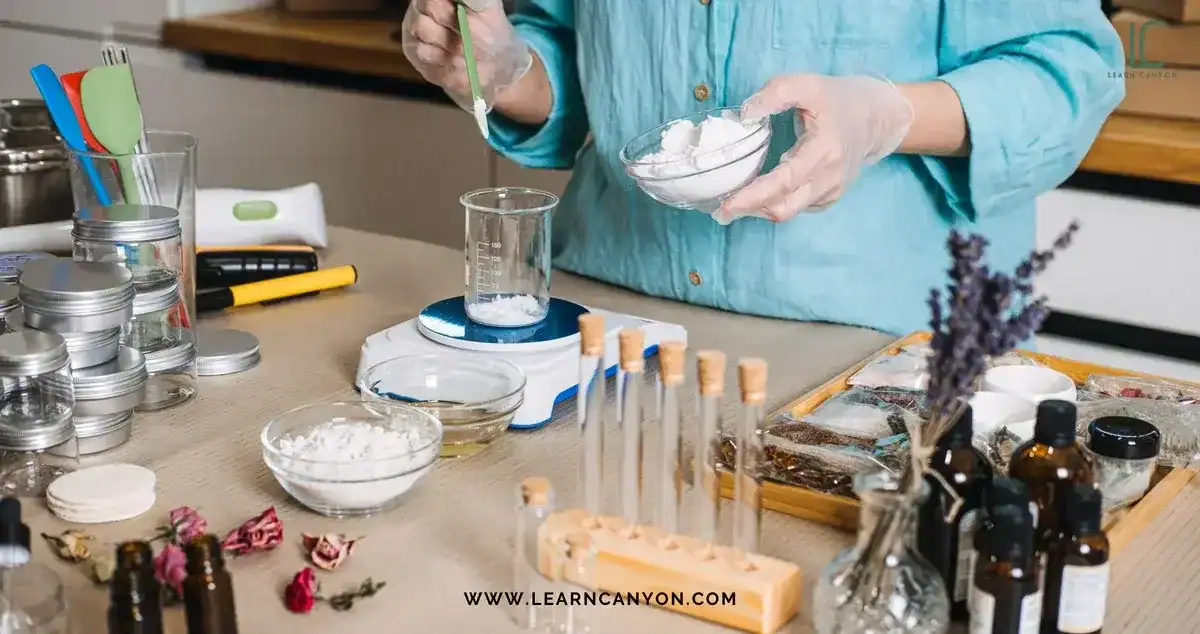
If you’ve been learning through DIY skincare tutorials or downloadable recipes, you don’t need to abandon everything you’ve learned.
Those experiences can be valuable, especially when they encourage curiosity and practical experimentation.
The next step is to begin looking at your formulations differently.
Start Asking Better Questions About Your Ingredients
The next time you study a cosmetic recipe, don’t immediately rush to make it.
Take a moment to examine the ingredient list.
Try to identify which ingredients are acting as humectants, emollients, emulsifiers, thickeners, or preservatives.
Look at their concentrations.
Read the supplier’s technical data sheets and understand their recommended conditions of use.
As you become more familiar with ingredient functions, you’ll begin recognising the reasoning behind different formulation structures.
Learn to Troubleshoot Rather Than Guess
Let’s say your lotion is too thin.
Your first instinct might be to add more thickener.
But the actual cause could involve the emulsifying system, processing method, ingredient interactions, or other structural factors.
Instead of making random changes, review the formulation and manufacturing process.
Identify possible causes and investigate them systematically.
Learning how to troubleshoot is one of the skills that makes formulation knowledge so valuable.
Build Your Understanding Through Structured Learning
Cosmetic formulation can feel overwhelming when your knowledge comes from disconnected recipes and short tutorials.
You might understand how to prepare a body butter but know very little about emulsification.
You may have made several facial serums without understanding how to evaluate preservation or ingredient compatibility.
Structured education helps connect these individual pieces of knowledge.
It gives you a foundation in cosmetic chemistry, ingredient science, formulation mathematics, manufacturing methods, stability, and troubleshooting.
And that foundation can help you become more independent and confident in your formulation decisions.
Common Questions About Cosmetic Recipes vs Professional Formulations
What is the difference between a cosmetic recipe and a professional formulation?
A cosmetic recipe provides ingredients, quantities, and instructions to make a product. A professional formulation goes further – it considers the scientific reasoning behind ingredient selection, appropriate concentrations, compatibility, manufacturing conditions, product performance, stability, and safety. The real difference isn’t what something is called, but the level of scientific understanding, development, documentation, and testing behind it.
Can I swap cosmetic ingredients if they perform the same function?
Not automatically. Two emulsifiers, thickeners, or preservatives that appear to perform similar functions can have very different chemical characteristics, processing requirements, and compatibility limitations. Replacing an ingredient without understanding these differences can significantly affect the finished product’s texture, stability, and performance.
Is a cosmetic product safe if it looks good and smells fine?
No. A product’s appearance alone cannot confirm its microbiological quality, preservation effectiveness, or long-term stability. Some stability problems develop gradually under different storage conditions. Preservation effectiveness needs to be verified through appropriate microbiological testing, such as preservative efficacy testing, particularly for water-containing cosmetic products intended for commercial sale.
Do I need to understand formulation science if I plan to use a contract manufacturer?
Yes – it’s extremely valuable. Understanding cosmetic formulation helps you communicate your product expectations clearly, evaluate ingredient choices, discuss technical challenges with your manufacturer, and understand why certain development stages require time and investment. Even if you’re not manufacturing yourself, technical knowledge helps you make better decisions throughout the product development process.
Ready to Move Beyond Cosmetic Recipes?
Cosmetic recipes can be a wonderful starting point.
They introduce you to ingredients, basic techniques, and the excitement of creating something with your own hands.
But if you want to move beyond following instructions, you need to develop a deeper understanding of formulation science.
You need to know why ingredients are included, how they interact, what affects product stability, and how to evaluate the results of your experiments.
Because following a recipe may help you recreate a product, but learning formulation science helps you understand how that product is designed.
And that understanding becomes especially valuable when you want to adapt products, investigate formulation problems, or develop something original.
You don’t need to stop enjoying recipes. You simply need to start looking beyond them.
If you’re passionate about skincare, haircare, or cosmetic product development and want to strengthen your scientific understanding, explore the professional formulation courses at Learn Canyon.
Because becoming a knowledgeable cosmetic formulator isn’t about how many recipes you’ve collected. It’s about how well you understand the science behind the products you create.
Keep learning: Related reading: How to Develop a Beauty Product That Customers Actually Want to Buy · Must-Know Skills for Beginner Cosmetic Formulators. Want to learn this properly? Explore our Free 4-Day Beginner Formulator Experience.