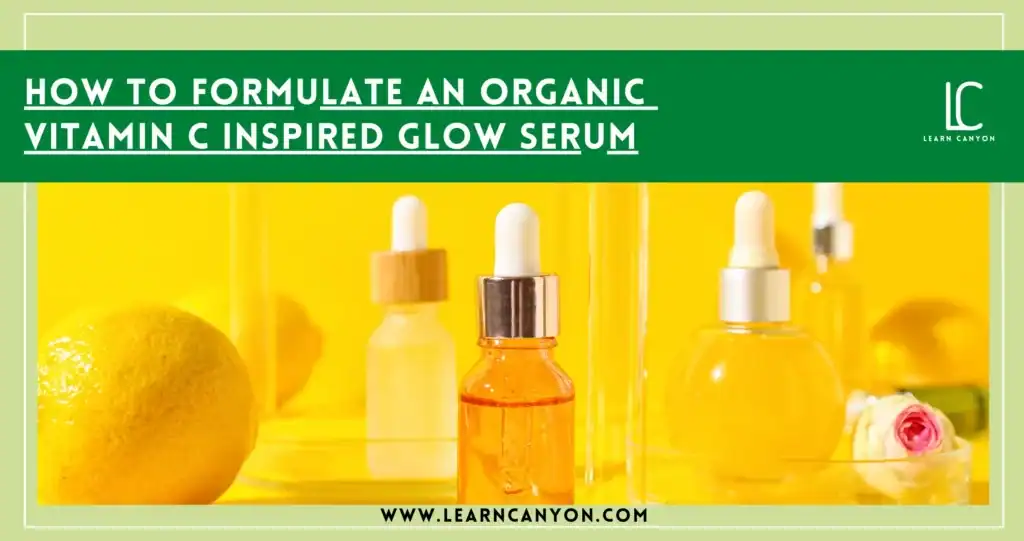
How to Formulate an
Organic Vitamin C-Inspired
Glow Serum
Why organic formulation is not about swapping one ingredient for another, and how to build a botanically powered brightening serum with intention, structure, and science.
Vitamin C serums are everywhere. But an organic vitamin C serum is not the same thing as a conventional formula with a botanical substitute dropped in. If you approach it that way, you will run into problems, with stability, claims, expectations, and the integrity of what you are actually making.
A botanical vitamin C serum draws its brightening power from whole-plant sources, not synthetic ascorbic acid derivatives.
What “Organic Vitamin C Serum” Actually Means
In conventional skincare, a vitamin C serum typically contains one of several well-studied ascorbic acid derivatives: L-ascorbic acid (LAA), sodium ascorbyl phosphate, magnesium ascorbyl phosphate, ascorbyl glucoside, or ethyl ascorbic acid. These are either synthetic or semi-synthetic compounds. They are often effective, but they are not appropriate when your goal is to formulate using only organic or naturally derived ingredients.
Certified organic vitamin C isolates that meet the requirements of COSMOS, Ecocert, or USDA Organic are not commonly available at the commercial level accessible to most formulators. Without a genuinely certified organic or naturally derived ascorbic acid source, you cannot accurately call your product an organic vitamin C serum.
What professional organic formulators do instead is design a botanical brightening serum, one that draws its glow-supporting benefits from vitamin C-rich plant extracts and antioxidant-rich botanicals. The result is a different product from a clinical LAA serum, but it is well-designed, purposeful, and genuinely beautiful.
This is how we teach formulation at Learn Canyon: not recipe-following. Intentional, science-informed organic skincare product design, from first principles.
Why We Are Not Using L-Ascorbic Acid in This Formula
L-ascorbic acid is notoriously unstable in water-based formulations. It oxidises readily when exposed to air, light, heat, and metal ions, visible as a yellowing or browning of the formula. At that point, the ascorbic acid has converted to dehydroascorbic acid and lost much of its efficacy.
To maintain stability, LAA formulas typically need to be held at a pH of 3.0 to 3.5, which is quite acidic and can cause irritation, particularly for sensitive skin types. Many natural preservative systems do not perform well at pH 3.5. And a serum sitting at pH 3.5 is not universally comfortable for everyday use.
This does not mean L-ascorbic acid has no place in natural formulation. If you source a non-synthetic, naturally derived ascorbic acid and have the regulatory basis to support your claims, you can work with it. But it requires a clear understanding of stability, pH management, and packaging strategy. For this organic vitamin C serum formula, we are intentionally working with botanical sources instead.
The Botanical Actives That Power This Organic Glow Serum
When you formulate through an organic lens, you look to the plant kingdom for your active ingredients. The following botanicals are each scientifically documented and authentically suited to a vitamin C-inspired brightening serum.
Amla, also called Indian gooseberry, is one of the most respected botanicals in Ayurvedic tradition. It is naturally high in ascorbic acid and tannins, with documented antioxidant, photoprotective, and skin-brightening properties. At 5% in this organic vitamin C serum formula, amla is the hero botanical, delivering a meaningful antioxidant punch. Always evaluate your supplier’s specification sheet, as amla extracts can vary significantly in colour and potency.
Acerola is one of the most concentrated natural food sources of vitamin C on the planet. When used as an extract, you are working with a complex matrix of naturally occurring compounds, including flavonoids and carotenoids, that contribute to the overall antioxidant profile of the serum. Always check your supplier’s documentation for total polyphenol or ascorbic acid content, as it matters for your product positioning.
Licorice root extract is one of the most useful ingredients in any botanical brightening serum. Its key active compound, glabridin, has been studied for its ability to inhibit tyrosinase, the enzyme involved in melanin synthesis, and for its anti-inflammatory properties. It is well-tolerated, works within a comfortable pH range, and has a long track record in both cosmetic and herbal use.
Green tea is rich in polyphenols, particularly EGCG (epigallocatechin gallate), which has well-documented antioxidant and anti-inflammatory activity. In this organic glow serum formula, it contributes to the overall antioxidant system and works synergistically with the other botanical actives. Green tea extract works well at the target pH and is compatible with the natural preservative system.
Calendula adds an important dimension to this formula: skin comfort. Brightening serums, even gentle botanical ones, can sometimes feel sensitising on more reactive skin types. Calendula’s soothing and calming properties help balance this, making the organic vitamin C serum more appropriate for daily use across a broader range of skin types, including sensitive skin.
Building a Base That Does Its Job
This is where newer formulators underestimate the complexity of serum design. The actives get all the attention, but the base system determines how the serum feels on skin, how stable it is, how well it preserves, and how effectively it delivers those actives.
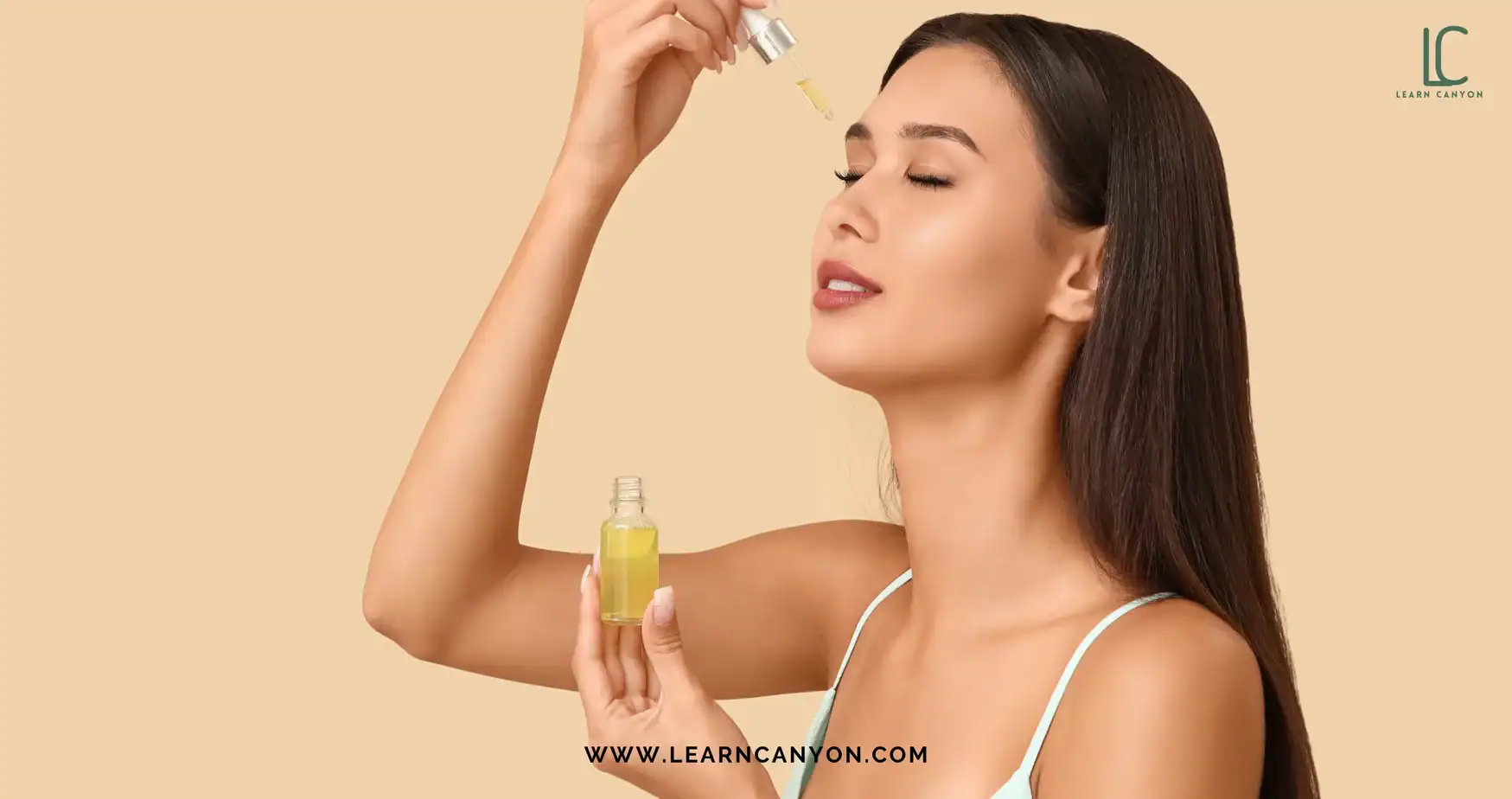
Organic formulation combines the precision of a lab with the intelligence of the plant kingdom.
Organic Aloe Vera Juice (45%)
Aloe vera juice makes up nearly half this formula, a deliberate choice. It functions simultaneously as a hydrating water phase and as a skin-soothing active in its own right. Aloe contains acemannan (a polysaccharide), amino acids, vitamins, and minerals that support skin barrier function and comfort. Always use cosmetic-grade, preserved, certified organic aloe vera juice, not raw gel from the plant.
Organic Rose Hydrosol (30%)
Rose hydrosol, the aromatic water produced during steam distillation of rose petals, brings multiple benefits. It adds a subtle, natural floral scent and contains trace levels of rose essential oil with naturally occurring phenylethyl alcohol, which contributes mild antimicrobial and skin-softening properties. At 30%, it meaningfully shapes the overall skin feel of the finished serum.
Organic Vegetable Glycerin (4% + 2%)
Glycerin appears twice in this formula. The Phase A addition serves as a humectant. The Phase B addition is used to pre-disperse xanthan gum, a critical process step that prevents lumping and ensures a smooth, lump-free serum.
Xanthan Gum Clear (0.30%)
Xanthan gum clear is a clarified grade that creates a light gel structure without clouding a clear serum. At 0.30%, it gives the formula just enough body for elegant application without sacrificing the lightweight, watery feel.
Sodium Phytate (0.20%)
A COSMOS-approved chelating agent derived from phytic acid found in plant seeds. Sodium phytate binds trace metal ions that can catalyse oxidation reactions, degrading your actives, causing colour changes, off-odours, and reduced shelf life. Always include a chelating agent in water-based formulas containing botanical extracts.
Full Ingredient Table: Organic Vitamin C Glow Serum
Target pH: 5.0 to 5.4 · Type: Lightweight botanical facial serum · Skin types: Normal, dull, dry, mature, sensitive
Full Ingredient Breakdown
Phases A, B & C · Cold-process water serum · Makes 100g batch
| Phase | Ingredient | % |
|---|---|---|
| A | Organic Aloe Vera Juice | 45.00% |
| A | Organic Rose Hydrosol | 30.00% |
| A | Organic Vegetable Glycerin | 4.00% |
| A | Organic Amla Extract | 5.00% |
| A | Organic Acerola Cherry Extract | 3.00% |
| A | Organic Licorice Root Extract | 3.00% |
| A | Sodium Phytate | 0.20% |
| B | Xanthan Gum Clear | 0.30% |
| B | Organic Vegetable Glycerin (for dispersion) | 2.00% |
| C | Organic Calendula Extract | 2.00% |
| C | Organic Green Tea Extract | 2.00% |
| C | Natural Preservative (e.g. Geogard ECT) | 1.00% |
| C | Lactic Acid or Citric Acid Solution (10%) | q.s. |
| C | Distilled Water | q.s. to 100% |
Step-by-Step Method for Formulating Your Organic Vitamin C Serum
Every step below includes the reasoning behind it, because understanding why is what separates a professional formulator from a recipe follower.
This is not optional. A water-based serum is a hospitable environment for microbial growth. Your beakers, spatulas, scale, pipettes, and any surface that will contact your formula must be sanitised with 70% isopropyl alcohol and allowed to dry completely before you start.
Weigh out your aloe vera juice, rose hydrosol, the first glycerin addition, amla extract, acerola extract, licorice extract, and sodium phytate into a clean beaker. Add them in order and mix gently until uniform. No heat required, this is a cold-process organic serum formula. Work at room temperature throughout.
In a separate small beaker, weigh out the xanthan gum clear and disperse it thoroughly into the second glycerin addition. Work the powder into the glycerin until you have a smooth, lump-free paste with no dry powder remaining. This step is critical, if you skip it and add xanthan gum directly to your water phase, you will almost certainly get lumps that cannot be fully hydrated out.
Add the xanthan gum slurry into Phase A slowly, while mixing continuously. Allow 20 to 30 minutes of gentle mixing for full hydration. Do not rush this step, incompletely hydrated xanthan gum will not produce a smooth serum.
Once the serum is smooth and uniform, add calendula extract, green tea extract, and your natural preservative. All added at room temperature with no heat required. Mix gently after each addition. Note the preservative’s effective pH range before moving to the next step.
Use a calibrated pH meter, not pH strips, which are not accurate enough for professional formulation. If the pH is above 5.4, add your 10% lactic acid or citric acid solution dropwise, mixing thoroughly between additions. Rest the serum for 2 to 4 hours, then recheck pH before filling.
Fill into your chosen packaging using a clean pipette or filling syringe. Label immediately with product name, batch number, date of manufacture, and any relevant testing information. Store any unfilled batch in a sealed, sanitised container in a cool, dark location.
Apply 2 to 3 drops to clean skin each morning, followed by moisturiser and broad-spectrum sunscreen.
Preservation in an Organic Serum: A Non-Negotiable Step
Some people assume that because a product uses natural or organic ingredients, it is inherently resistant to microbial contamination. This is not true. A water-based formula rich in botanical extracts, which contain sugars, proteins, and other organic compounds, can be more susceptible to contamination, not less.
Every water-based organic skincare product must be adequately preserved. Full stop.
For an organic-compatible formulation, COSMOS-approved or naturally accepted preservative options include:
Always check the effective pH range of your chosen preservative before finalising your formula pH. Geogard ECT works best below pH 5.5. If your formula sits at pH 6.0 and your preservative requires pH ≤ 5.5, you have a preservation failure waiting to happen. Preservative selection and pH design must be considered together, not separately. Preservative Efficacy Testing (PET / Challenge Testing) is the only way to verify that your organic vitamin C serum is adequately preserved. Commission this testing before you sell or distribute.
Packaging Your Organic Vitamin C Serum: It Matters as Much as the Formula
Botanical antioxidant formulas are light- and air-sensitive. Packaging is not an afterthought, it is part of the formula design for any organic brightening serum.
Clear glass or plastic bottles, and never package an organic vitamin C serum in an open jar. Every time a jar is opened, the formula is exposed to air, fingers, and environmental contamination, a significant stability risk for any botanical water serum.
How to Write Accurate Claims for Your Organic Vitamin C Serum
In Canada (CCPSA), the EU, the US (FD&C Act), and beyond, cosmetic claims must be truthful and must not mislead consumers. This is both a legal and an ethical matter that applies to every organic skincare formulator.
Your claims language should describe what the product does cosmetically, not make therapeutic promises you cannot substantiate.
The left column crosses the line from cosmetic into therapeutic territory. The right column describes what the product does in terms of appearance and skin feel, which is what a cosmetic claim must do.
Before You Share or Sell Your Organic Serum: Testing Checklist
A formula that looks beautiful on day one is not automatically a finished product. Professional organic formulation includes understanding how a product behaves over time under different temperature conditions, in different packaging, and across its projected shelf life.
Stability testing does not have to be expensive at the development stage. Begin with real-time and oven testing and evaluate appearance, pH, and odour at regular intervals. Third-party laboratory testing for microbial and PET testing is essential before distributing the product to others.
How to Use Your Organic Vitamin C-Inspired Glow Serum
Application Instructions
Apply 2 to 3 drops to clean skin after cleansing and toning. Use once daily, preferably in the morning. Follow with moisturiser and broad-spectrum sunscreen.
FAQs About Formulating an Organic Vitamin C Serum
Can I use L-ascorbic acid in an organic vitamin C serum?
Standard L-ascorbic acid is synthetic or semi-synthetic and does not meet COSMOS or USDA Organic certification requirements. For a true organic vitamin C serum, formulators use botanical sources such as amla extract and acerola cherry extract, which naturally contain vitamin C alongside complementary antioxidant compounds.
What is the ideal pH for an organic vitamin C glow serum?
The target pH for this botanical brightening serum is 5.0 to 5.4. This range is gentle on skin, keeps the natural preservative system effective, and maintains botanical extract stability without the irritation risk of the very low pH required by conventional L-ascorbic acid formulas.
Does an organic serum need a preservative?
Yes, without exception. Every water-based skincare product must be adequately preserved. Botanical extracts contain sugars and proteins that can actually make a formula more vulnerable to microbial contamination. COSMOS-approved options include Geogard ECT, sodium benzoate with potassium sorbate, and Naticide.
What claims can I make for my organic vitamin C serum?
You may use appearance-based cosmetic claims such as “supports a more radiant-looking complexion” or “rich in antioxidant botanicals.” Avoid therapeutic claims like “treats dark spots,” “eliminates melasma,” or “reverses ageing”, these cross into drug territory under regulations in the EU, US, and Canada.
What packaging is best for an organic vitamin C-inspired serum?
Amber glass dropper bottles, opaque serum pump bottles, or airless pump packaging are all suitable choices. Avoid clear glass and open jars, which expose the formula to light, air, and contamination, all of which degrade botanical antioxidants rapidly.
Is an organic vitamin C serum as effective as a conventional one?
An organic vitamin C-inspired serum is a genuinely different product, not a lesser one. It works through a matrix of whole-plant antioxidants rather than isolated ascorbic acid derivatives. When well-formulated with amla, acerola, licorice root, green tea, and calendula, it delivers meaningful skin-brightening and antioxidant benefits in a format that is gentler, more pH-compatible, and fully aligned with organic certification standards.
Organic formulation is a discipline. It rewards you when you understand the science behind every decision.
At Learn Canyon, this is how we teach every formula, with ingredient science, formulation logic, stability thinking, and the confidence that comes from knowing why every decision was made.

Explore the Diploma Course →

How to Formulate an
Organic Vitamin C-Inspired
Glow Serum
Why organic formulation is not about swapping one ingredient for another — and how to build a botanically powered brightening serum with intention, structure, and science.
Vitamin C serums are everywhere. But an organic vitamin C serum is not the same thing as a conventional formula with a botanical substitute dropped in. If you approach it that way, you will run into problems — with stability, claims, expectations, and the integrity of what you are actually making.
Learn Canyon · Science-informed organic skincare formulation
A botanical vitamin C serum draws its brightening power from whole-plant sources, not synthetic ascorbic acid derivatives.
01 · Understanding the DistinctionWhat “Organic Vitamin C Serum” Actually Means
In conventional skincare, a vitamin C serum typically contains one of several well-studied ascorbic acid derivatives: L-ascorbic acid (LAA), sodium ascorbyl phosphate, magnesium ascorbyl phosphate, ascorbyl glucoside, or ethyl ascorbic acid. These are either synthetic or semi-synthetic compounds. They are often effective, but they are not appropriate when your goal is to formulate using only organic or naturally derived ingredients.
Certified organic vitamin C isolates that meet the requirements of COSMOS, Ecocert, or USDA Organic are not commonly available at the commercial level accessible to most formulators. Without a genuinely certified organic or naturally derived ascorbic acid source, you cannot accurately call your product an organic vitamin C serum.
The Professional ApproachWhat professional organic formulators do instead is design a botanical brightening serum — one that draws its glow-supporting benefits from vitamin C-rich plant extracts and antioxidant-rich botanicals. The result is a different product from a clinical LAA serum, but it is well-designed, purposeful, and genuinely beautiful.
This is how we teach formulation at Learn Canyon: not recipe-following. Intentional, science-informed organic skincare product design — from first principles.
02 · The Challenge with L-Ascorbic AcidWhy We Are Not Using L-Ascorbic Acid in This Formula
L-ascorbic acid is notoriously unstable in water-based formulations. It oxidises readily when exposed to air, light, heat, and metal ions — visible as a yellowing or browning of the formula. At that point, the ascorbic acid has converted to dehydroascorbic acid and lost much of its efficacy.
To maintain stability, LAA formulas typically need to be held at a pH of 3.0 to 3.5, which is quite acidic and can cause irritation, particularly for sensitive skin types. Many natural preservative systems do not perform well at pH 3.5. And a serum sitting at pH 3.5 is not universally comfortable for everyday use.
Formulator’s NoteThis does not mean L-ascorbic acid has no place in natural formulation. If you source a non-synthetic, naturally derived ascorbic acid and have the regulatory basis to support your claims, you can work with it. But it requires a clear understanding of stability, pH management, and packaging strategy. For this organic vitamin C serum formula, we are intentionally working with botanical sources instead.
03 · The Active SystemThe Botanical Actives That Power This Organic Glow Serum
When you formulate through an organic lens, you look to the plant kingdom for your active ingredients. The following botanicals are each scientifically documented and authentically suited to a vitamin C-inspired brightening serum.
🫐 Amla Extract — 5% Primary Antioxidant Botanical · Ayurvedic Brightening Active Phyllanthus emblicaAmla, also called Indian gooseberry, is one of the most respected botanicals in Ayurvedic tradition. It is naturally high in ascorbic acid and tannins, with documented antioxidant, photoprotective, and skin-brightening properties. At 5% in this organic vitamin C serum formula, amla is the hero botanical — delivering a meaningful antioxidant punch. Always evaluate your supplier’s specification sheet, as amla extracts can vary significantly in colour and potency.
🍒 Acerola Cherry Extract — 3% Vitamin C-Rich Fruit Extract · Antioxidant Support Malpighia emarginataAcerola is one of the most concentrated natural food sources of vitamin C on the planet. When used as an extract, you are working with a complex matrix of naturally occurring compounds — including flavonoids and carotenoids — that contribute to the overall antioxidant profile of the serum. Always check your supplier’s documentation for total polyphenol or ascorbic acid content, as it matters for your product positioning.
🌾 Licorice Root Extract — 3% Brightening Botanical · Skin Tone Support Glycyrrhiza glabraLicorice root extract is one of the most useful ingredients in any botanical brightening serum. Its key active compound, glabridin, has been studied for its ability to inhibit tyrosinase — the enzyme involved in melanin synthesis — and for its anti-inflammatory properties. It is well-tolerated, works within a comfortable pH range, and has a long track record in both cosmetic and herbal use.
🍵 Green Tea Extract — 2% Antioxidant · Anti-Inflammatory Support Camellia sinensisGreen tea is rich in polyphenols, particularly EGCG (epigallocatechin gallate), which has well-documented antioxidant and anti-inflammatory activity. In this organic glow serum formula, it contributes to the overall antioxidant system and works synergistically with the other botanical actives. Green tea extract works well at the target pH and is compatible with the natural preservative system.
🌼 Calendula Extract — 2% Soothing · Skin Comfort Support Calendula officinalisCalendula adds an important dimension to this formula: skin comfort. Brightening serums — even gentle botanical ones — can sometimes feel sensitising on more reactive skin types. Calendula’s soothing and calming properties help balance this, making the organic vitamin C serum more appropriate for daily use across a broader range of skin types, including sensitive skin.
04 · The Base SystemBuilding a Base That Does Its Job
This is where newer formulators underestimate the complexity of serum design. The actives get all the attention, but the base system determines how the serum feels on skin, how stable it is, how well it preserves, and how effectively it delivers those actives.
Organic formulation combines the precision of a lab with the intelligence of the plant kingdom.
Organic Aloe Vera Juice — 45%
Aloe vera juice makes up nearly half this formula — a deliberate choice. It functions simultaneously as a hydrating water phase and as a skin-soothing active in its own right. Aloe contains acemannan (a polysaccharide), amino acids, vitamins, and minerals that support skin barrier function and comfort. Always use cosmetic-grade, preserved, certified organic aloe vera juice — not raw gel from the plant.
Organic Rose Hydrosol — 30%
Rose hydrosol — the aromatic water produced during steam distillation of rose petals — brings multiple benefits. It adds a subtle, natural floral scent and contains trace levels of rose essential oil with naturally occurring phenylethyl alcohol, which contributes mild antimicrobial and skin-softening properties. At 30%, it meaningfully shapes the overall skin feel of the finished serum.
Organic Vegetable Glycerin — 4% + 2%
Glycerin appears twice in this formula. The Phase A addition serves as a humectant. The Phase B addition is used to pre-disperse xanthan gum — a critical process step that prevents lumping and ensures a smooth, lump-free serum.
Xanthan Gum Clear — 0.30%
Xanthan gum clear is a clarified grade that creates a light gel structure without clouding a clear serum. At 0.30%, it gives the formula just enough body for elegant application without sacrificing the lightweight, watery feel.
Sodium Phytate — 0.20%
A COSMOS-approved chelating agent derived from phytic acid found in plant seeds. Sodium phytate binds trace metal ions that can catalyse oxidation reactions — degrading your actives, causing colour changes, off-odours, and reduced shelf life. Always include a chelating agent in water-based formulas containing botanical extracts.
05 · Complete FormulaFull Ingredient Table — Organic Vitamin C Glow Serum
Target pH: 5.0–5.4 · Type: Lightweight botanical facial serum · Skin types: Normal, dull, dry, mature, sensitive
Full Ingredient Breakdown
Phases A, B & C · Cold-process water serum · Makes 100g batch
| Phase | Ingredient | % |
|---|---|---|
| A | Organic Aloe Vera Juice | 45.00% |
| A | Organic Rose Hydrosol | 30.00% |
| A | Organic Vegetable Glycerin | 4.00% |
| A | Organic Amla Extract | 5.00% |
| A | Organic Acerola Cherry Extract | 3.00% |
| A | Organic Licorice Root Extract | 3.00% |
| A | Sodium Phytate | 0.20% |
| B | Xanthan Gum Clear | 0.30% |
| B | Organic Vegetable Glycerin (for dispersion) | 2.00% |
| C | Organic Calendula Extract | 2.00% |
| C | Organic Green Tea Extract | 2.00% |
| C | Natural Preservative (e.g. Geogard ECT) | 1.00% |
| C | Lactic Acid or Citric Acid Solution (10%) | q.s. |
| C | Distilled Water | q.s. to 100% |
Step-by-Step Method for Formulating Your Organic Vitamin C Serum
Every step below includes the reasoning behind it — because understanding why is what separates a professional formulator from a recipe follower.
1 Sanitise Everything Before You BeginThis is not optional. A water-based serum is a hospitable environment for microbial growth. Your beakers, spatulas, scale, pipettes, and any surface that will contact your formula must be sanitised with 70% isopropyl alcohol and allowed to dry completely before you start.
2 Prepare Phase AWeigh out your aloe vera juice, rose hydrosol, the first glycerin addition, amla extract, acerola extract, licorice extract, and sodium phytate into a clean beaker. Add them in order and mix gently until uniform. No heat required — this is a cold-process organic serum formula. Work at room temperature throughout.
3 Prepare the Xanthan Gum SlurryIn a separate small beaker, weigh out the xanthan gum clear and disperse it thoroughly into the second glycerin addition. Work the powder into the glycerin until you have a smooth, lump-free paste with no dry powder remaining. This step is critical — if you skip it and add xanthan gum directly to your water phase, you will almost certainly get lumps that cannot be fully hydrated out.
4 Combine Phase B into Phase AAdd the xanthan gum slurry into Phase A slowly, while mixing continuously. Allow 20–30 minutes of gentle mixing for full hydration. Do not rush this step — incompletely hydrated xanthan gum will not produce a smooth serum.
5 Add Phase C IngredientsOnce the serum is smooth and uniform, add calendula extract, green tea extract, and your natural preservative. All added at room temperature with no heat required. Mix gently after each addition. Note the preservative’s effective pH range before moving to the next step.
6 Check and Adjust pHUse a calibrated pH meter — not pH strips, which are not accurate enough for professional formulation. If the pH is above 5.4, add your 10% lactic acid or citric acid solution dropwise, mixing thoroughly between additions. Rest the serum for 2–4 hours, then recheck pH before filling.
7 Fill and LabelFill into your chosen packaging using a clean pipette or filling syringe. Label immediately with product name, batch number, date of manufacture, and any relevant testing information. Store any unfilled batch in a sealed, sanitised container in a cool, dark location.
Apply 2–3 drops to clean skin each morning, followed by moisturiser and broad-spectrum sunscreen.
07 · PreservationPreservation in an Organic Serum — A Non-Negotiable Step
Some people assume that because a product uses natural or organic ingredients, it is inherently resistant to microbial contamination. This is not true. A water-based formula rich in botanical extracts — which contain sugars, proteins, and other organic compounds — can be more susceptible to contamination, not less.
Every water-based organic skincare product must be adequately preserved. Full stop.
For an organic-compatible formulation, COSMOS-approved or naturally accepted preservative options include:
✓ Geogard ECT — a blend of benzyl alcohol, salicylic acid, glycerin, and sorbic acid; a well-regarded COSMOS-approved choice ✓ Sodium benzoate and potassium sorbate combination — widely accepted, effective at low pH ✓ Naticide — note: functions partly as a fragrance and needs to be disclosed appropriately on the label Critical PointAlways check the effective pH range of your chosen preservative before finalising your formula pH. Geogard ECT works best below pH 5.5. If your formula sits at pH 6.0 and your preservative requires pH ≤ 5.5, you have a preservation failure waiting to happen. Preservative selection and pH design must be considered together, not separately. Preservative Efficacy Testing (PET / Challenge Testing) is the only way to verify that your organic vitamin C serum is adequately preserved. Commission this testing before you sell or distribute.
08 · Packaging StrategyPackaging Your Organic Vitamin C Serum — It Matters as Much as the Formula
Botanical antioxidant formulas are light- and air-sensitive. Packaging is not an afterthought — it is part of the formula design for any organic brightening serum.
🟫 Amber Glass Dropper Protects against UV light — the primary cause of antioxidant degradation 🫙 Opaque Serum Pump Minimises air exposure on every use of the serum 💨 Airless Pump Best for oxidation-sensitive botanical antioxidants AvoidClear glass or plastic bottles, and never package an organic vitamin C serum in an open jar. Every time a jar is opened, the formula is exposed to air, fingers, and environmental contamination — a significant stability risk for any botanical water serum.
09 · Claims LanguageHow to Write Accurate Claims for Your Organic Vitamin C Serum
In Canada (CCPSA), the EU, the US (FD&C Act), and beyond, cosmetic claims must be truthful and must not mislead consumers. This is both a legal and an ethical matter that applies to every organic skincare formulator.
Your claims language should describe what the product does cosmetically — not make therapeutic promises you cannot substantiate.
❌ Claims to Avoid ✗ Removes pigmentation ✗ Treats or cures dark spots ✗ Reverses signs of aging ✗ Works like 20% vitamin C ✗ Eliminates melasma ✗ Clinically proven brightening ✅ Appropriate Claims ✓ Helps improve the appearance of dull skin ✓ Supports a more radiant-looking complexion ✓ Rich in antioxidant botanicals ✓ Hydrates and refreshes tired-looking skin ✓ Inspired by vitamin C-rich plants ✓ Formulated to support a luminous glowThe left column crosses the line from cosmetic into therapeutic territory. The right column describes what the product does in terms of appearance and skin feel — which is what a cosmetic claim must do.
10 · Stability & Safety TestingBefore You Share or Sell Your Organic Serum — Testing Checklist
A formula that looks beautiful on day one is not automatically a finished product. Professional organic formulation includes understanding how a product behaves over time under different temperature conditions, in different packaging, and across its projected shelf life.
✓ Appearance testing (colour, clarity, texture) over time ✓ pH stability check at weeks 1, 4, 8, 12 minimum ✓ Odour observation — any off-notes developing? ✓ Microbial testing — initial and post-stability ✓ PET / Challenge Testing — preservative efficacy verified ✓ Packaging compatibility — no leaching or interaction ✓ Patch testing — skin safety on volunteers ✓ Accelerated stability — 40°C / 75% RH cyclingStability testing does not have to be expensive at the development stage. Begin with real-time and oven testing and evaluate appearance, pH, and odour at regular intervals. Third-party laboratory testing for microbial and PET testing is essential before distributing the product to others.
11 · Application InstructionsHow to Use Your Organic Vitamin C-Inspired Glow Serum
Application Instructions
Apply 2–3 drops to clean skin after cleansing and toning. Use once daily, preferably in the morning. Follow with moisturiser and broad-spectrum sunscreen.
☀️ UV exposure is one of the primary drivers of dullness, uneven skin tone, and premature skin ageing. Your botanical brightening serum supports your skin — but without daily UV protection, you are working against yourself. Always include this message when educating customers about your organic vitamin C serum. 12 · Frequently Asked QuestionsFAQs About Formulating an Organic Vitamin C Serum
Can I use L-ascorbic acid in an organic vitamin C serum?
Standard L-ascorbic acid is synthetic or semi-synthetic and does not meet COSMOS or USDA Organic certification requirements. For a true organic vitamin C serum, formulators use botanical sources such as amla extract and acerola cherry extract, which naturally contain vitamin C alongside complementary antioxidant compounds.
What is the ideal pH for an organic vitamin C glow serum?
The target pH for this botanical brightening serum is 5.0–5.4. This range is gentle on skin, keeps the natural preservative system effective, and maintains botanical extract stability without the irritation risk of the very low pH required by conventional L-ascorbic acid formulas.
Does an organic serum need a preservative?
Yes — without exception. Every water-based skincare product must be adequately preserved. Botanical extracts contain sugars and proteins that can actually make a formula more vulnerable to microbial contamination. COSMOS-approved options include Geogard ECT, sodium benzoate with potassium sorbate, and Naticide.
What claims can I make for my organic vitamin C serum?
You may use appearance-based cosmetic claims such as “supports a more radiant-looking complexion” or “rich in antioxidant botanicals.” Avoid therapeutic claims like “treats dark spots,” “eliminates melasma,” or “reverses ageing” — these cross into drug territory under regulations in the EU, US, and Canada.
What packaging is best for an organic vitamin C-inspired serum?
Amber glass dropper bottles, opaque serum pump bottles, or airless pump packaging are all suitable choices. Avoid clear glass and open jars, which expose the formula to light, air, and contamination — all of which degrade botanical antioxidants rapidly.
Is an organic vitamin C serum as effective as a conventional one?
An organic vitamin C-inspired serum is a genuinely different product — not a lesser one. It works through a matrix of whole-plant antioxidants rather than isolated ascorbic acid derivatives. When well-formulated with amla, acerola, licorice root, green tea, and calendula, it delivers meaningful skin-brightening and antioxidant benefits in a format that is gentler, more pH-compatible, and fully aligned with organic certification standards.
Organic formulation is a discipline. It rewards you when you understand the science behind every decision.
At Learn Canyon, this is how we teach every formula — with ingredient science, formulation logic, stability thinking, and the confidence that comes from knowing why every decision was made.
Explore the Diploma Course →